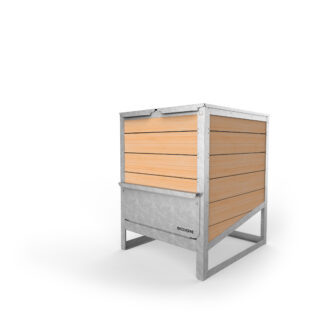
Above-ground composter for processing faecal matter from dry toilets. Features a filling chamber, a maturation chamber and a 300-litre leachate collection tank. Can be installed on impermeable ground and is protected against rodents. Designed for housing estates, private individuals, businesses and local authorities.
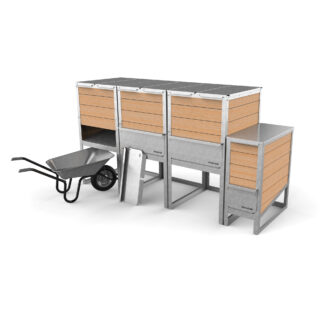
The Ekovore above-ground dry toilet composter processes faecal matter from dry toilets in urban environments. It consists of two chambers of 500 to 800 litres, one for filling and the other for maturation, with the option of a third chamber for storing litter. The entire unit is installed on an impermeable surface, without the need for building work, and features built-in protection against rodents for both the composter and the retention tank. The composting cycle lasts two years: the time required for the soil microfauna to naturally eliminate pathogens. A 300-litre leachate collection tank, with a padlockable valve, completes the system and allows connection to a domestic wastewater treatment system (planted filter, phytoremediation, etc.) or to the mains drainage system. It is designed for housing estates, private individuals, cultural venues, businesses and local authorities that install dry toilets and require a secure, self-contained disposal solution, with or without a connection to the mains drainage system.
Composter for dry toilets: a self-contained, controlled above-ground solution
The Ekovore composting system processes fecal matter from dry toilets. It is designed for areas without a sewerage system or for projects aimed at the environmentally friendly and sustainable management of human waste.
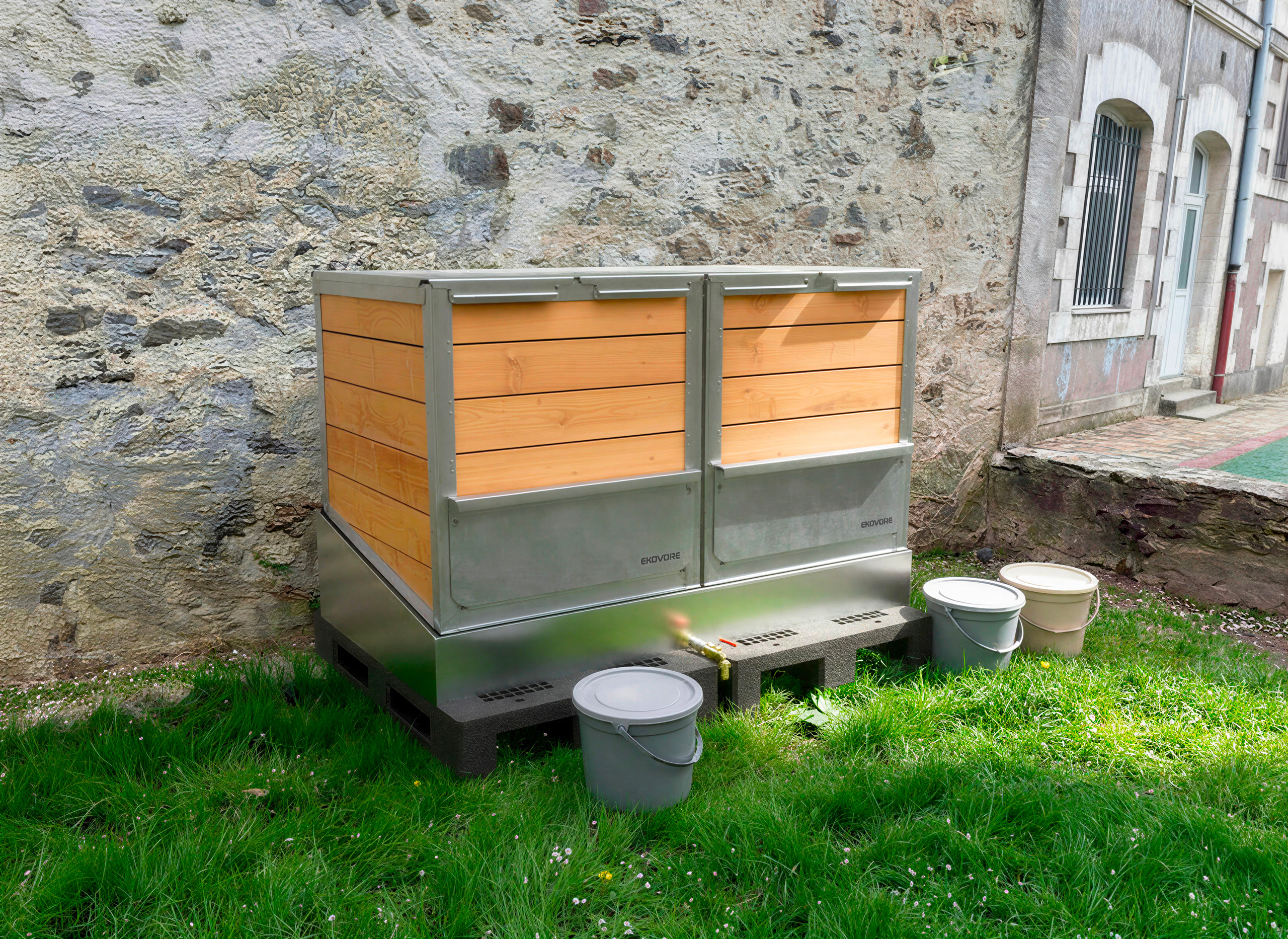
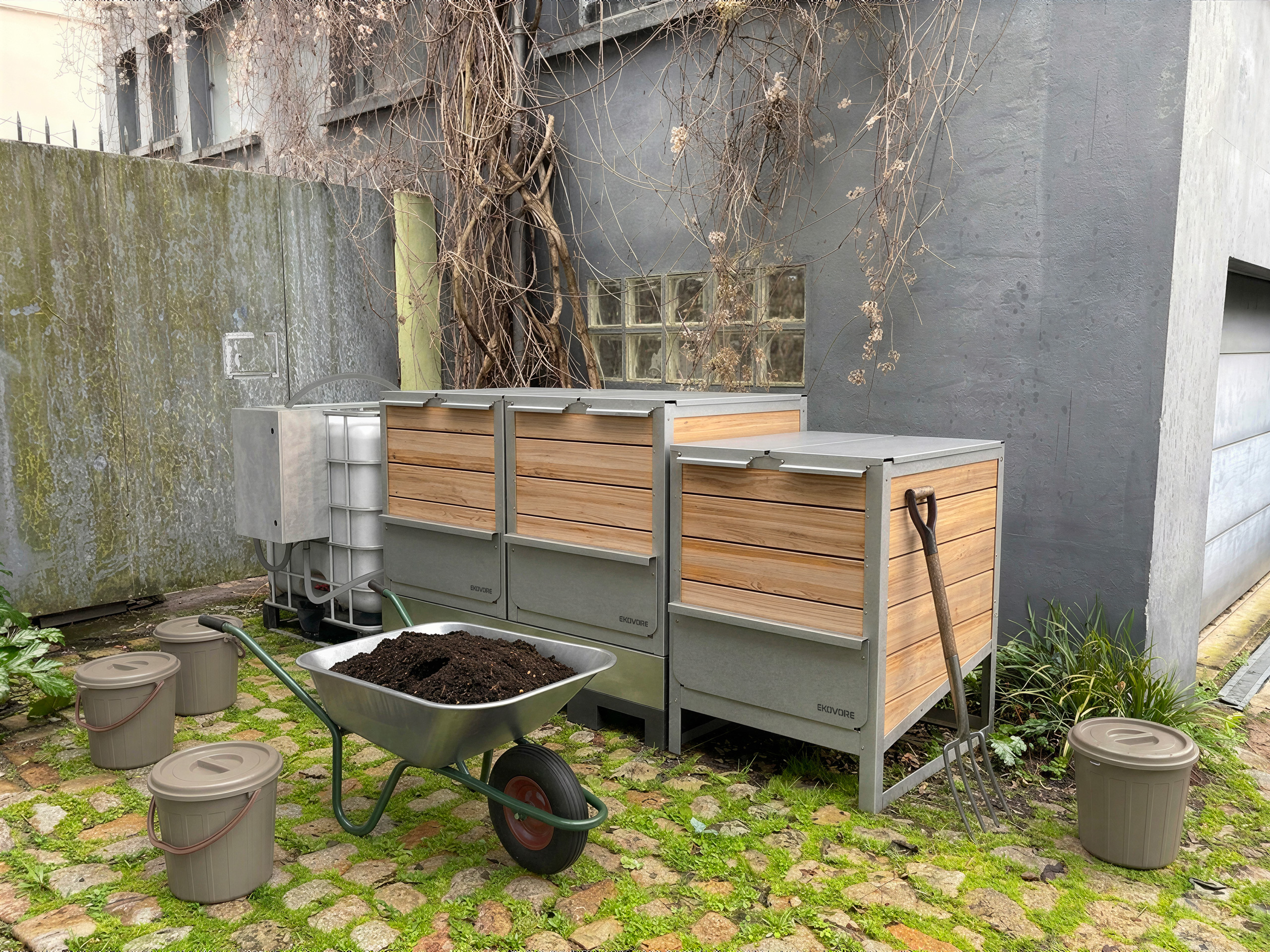
This solution can be installed on impermeable artificial surfaces, such as a concrete courtyard in a block of flats, whilst remaining protected against rodents.
How the dry toilet composter works
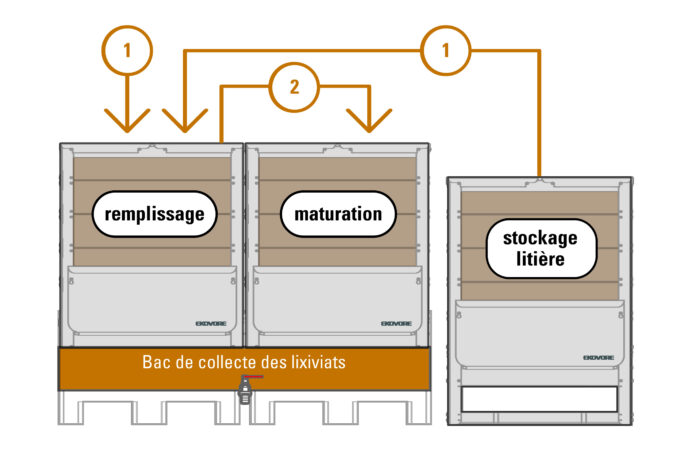
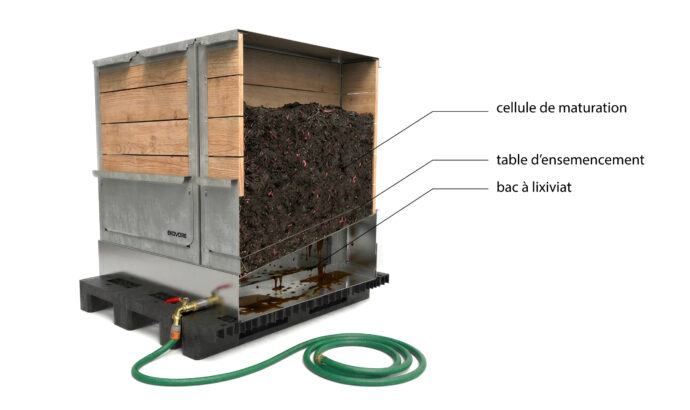
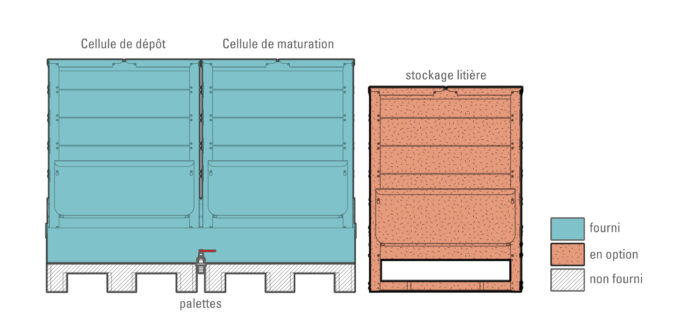
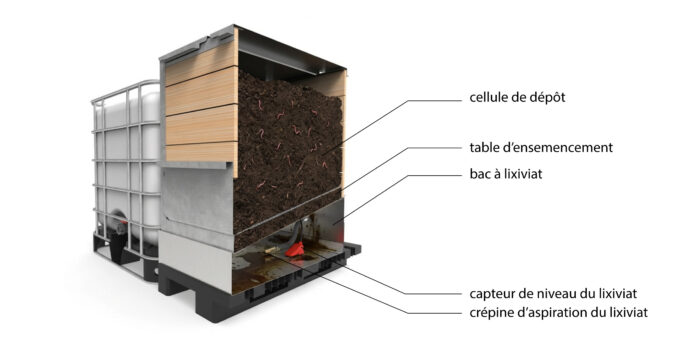
Two 500-litre tanks for filling and maturation, plus an optional third tank for storing bedding (dry matter)
Compost started bedto feed living soil to ensure the composting process
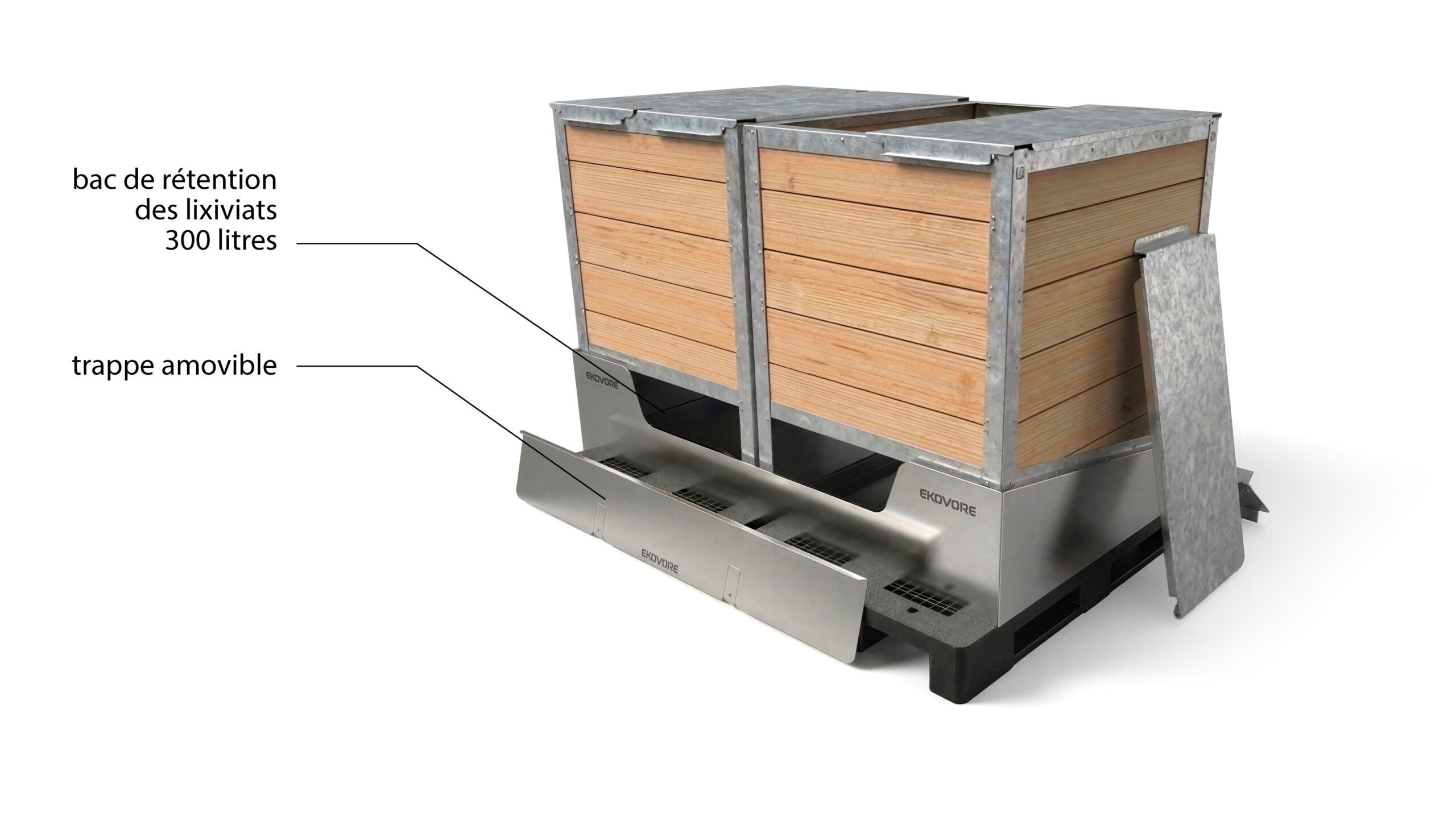
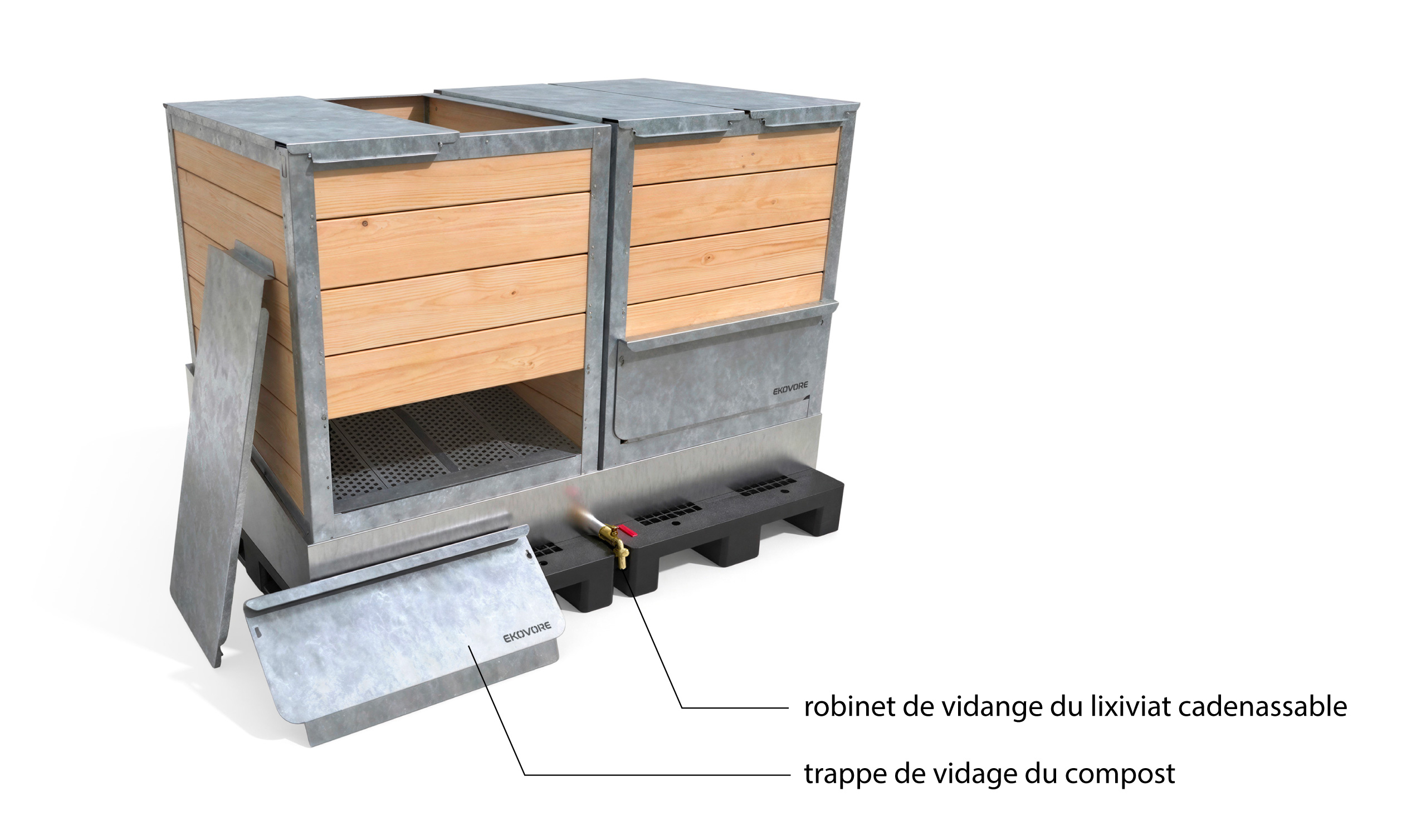
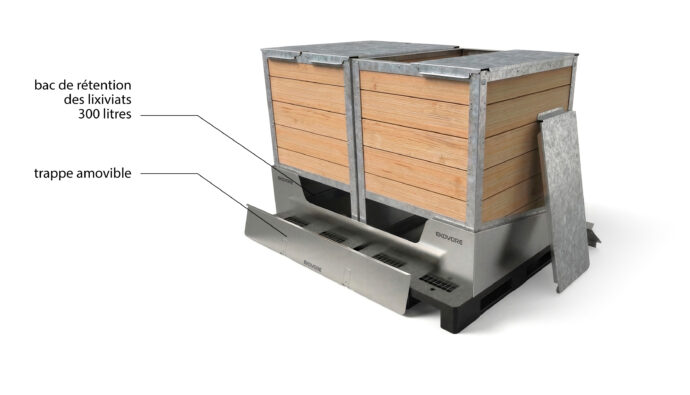
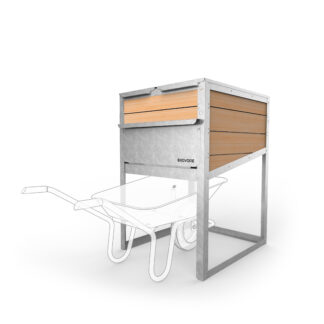
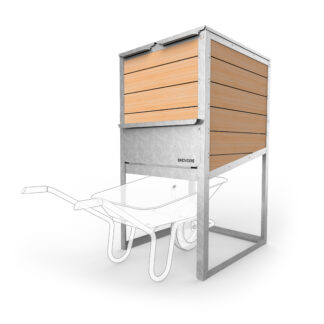
300-litre leachate collection tank positioned beneath the cells, with a padlockable valve and a removable inspection hatch
Recommendations for ensuring high-quality composting
Two full years of maturation allow pathogens to be eliminated naturally.
Cover the mixed materials with a layer of breathable bedding taken from the storage bin.
Regular monitoring is recommended to optimise composting and leachate management.
Advantages of composting dry toilets
An environmentally friendly, self-sufficient, above-ground solution, suitable for urban environments.
Reducing the impact on water and limiting discharges into the natural environment.
Can be installed on impermeable artificial surfaces without the need for building work.
Built-in protection against rodents, for both the composter and the drip tray.
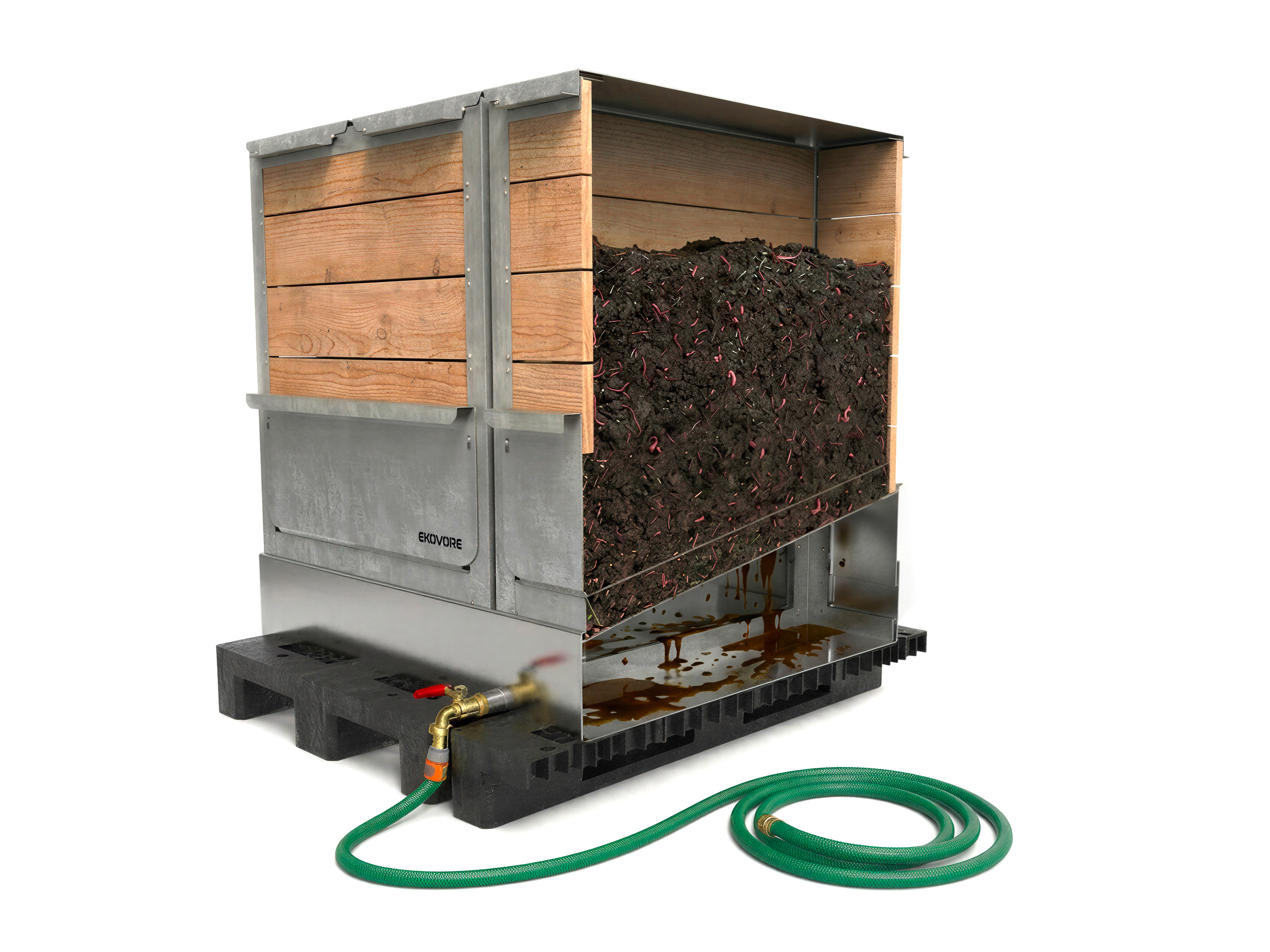
Retention tank with tap for gravity drainage, without a pump.
The tank is designed as standard to accommodate the 12V pump kit (suction strainer and level switch) — available as an option.
Configuration: dual-chamber system allowing for alternating composting cycles (filling / maturation)
Leachate retention tank: 300 litres, made of stainless steel
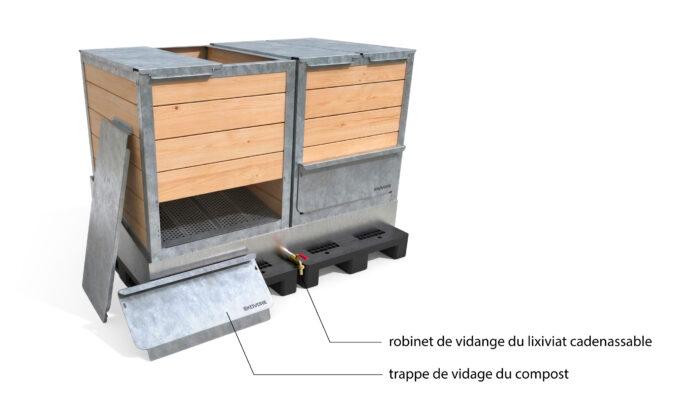
Padlockable drain valve: Draining of leachate
Access and maintenance:
Removable panel for easy access to the drip tray at the rear of the unit
Hatches for emptying the compost
Structure:
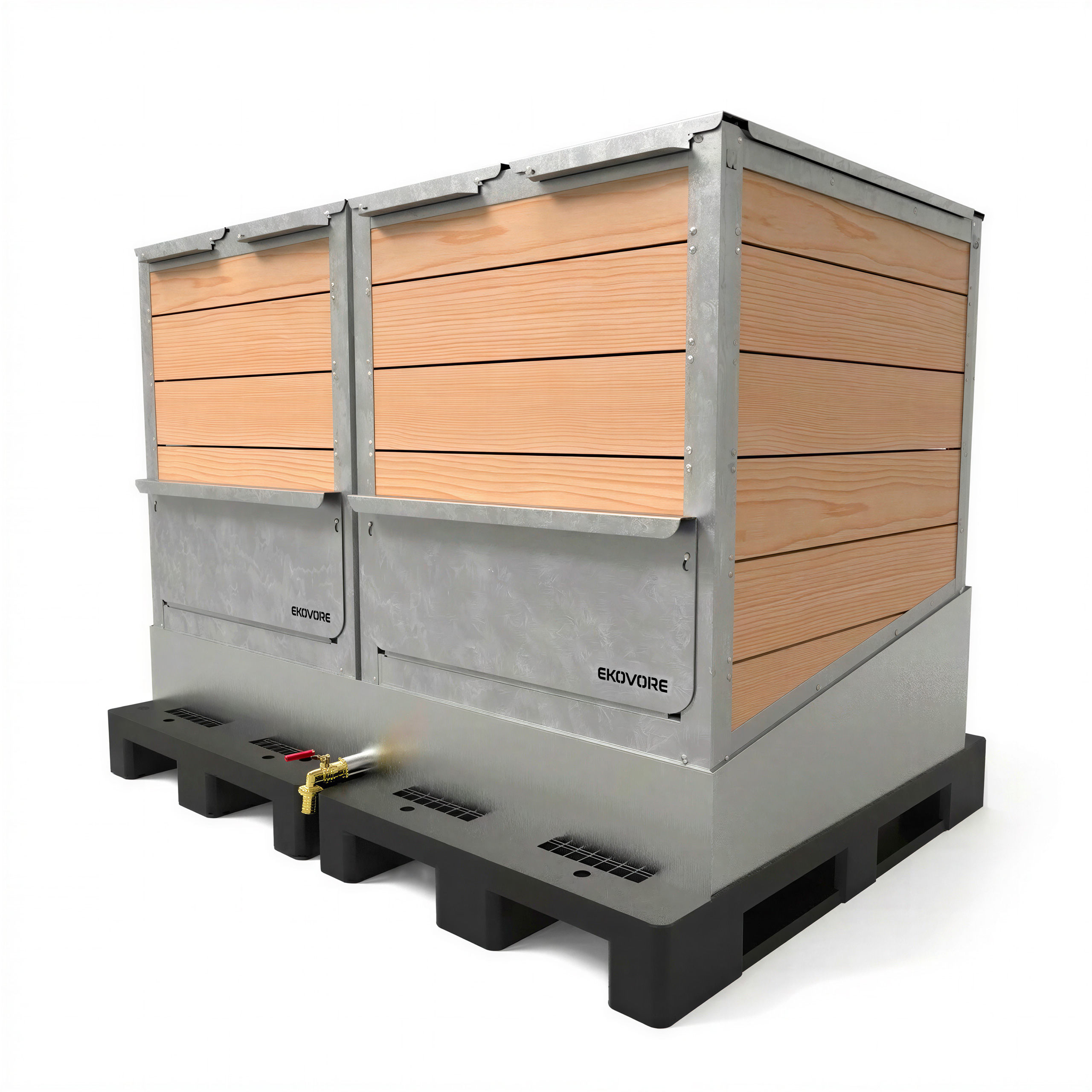
Sturdy metal frame (galvanised steel)
Untreated Douglas fir cladding, 21 mm thick
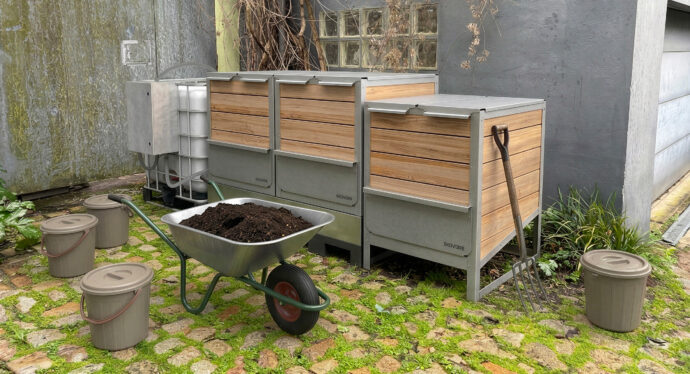
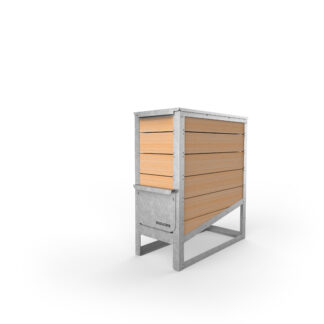
Illustration showing two composting units for dry toilets, with an open front hatch, a lid for adding waste, and a watertight container with a drain tap.
Polyethylene pallets not supplied
Designed for heavy-duty use, this system combines durability, accessibility and operational reliability.
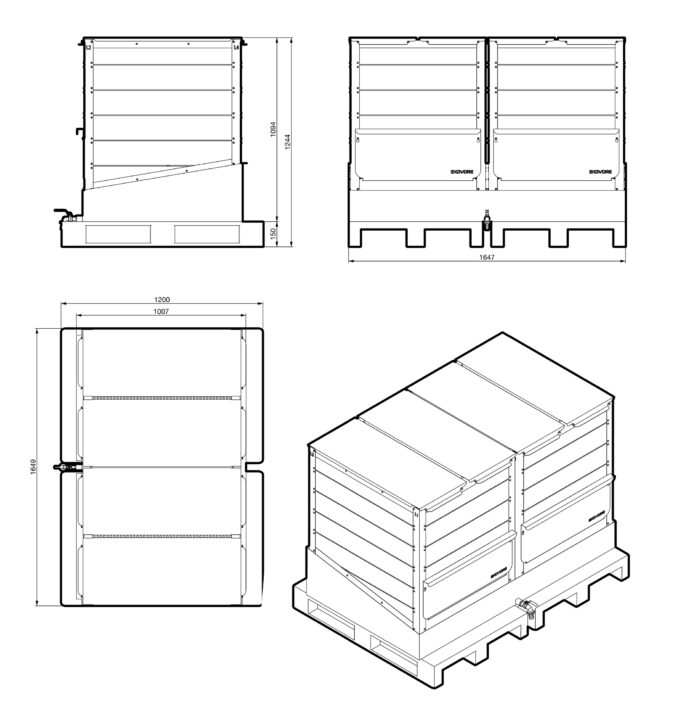
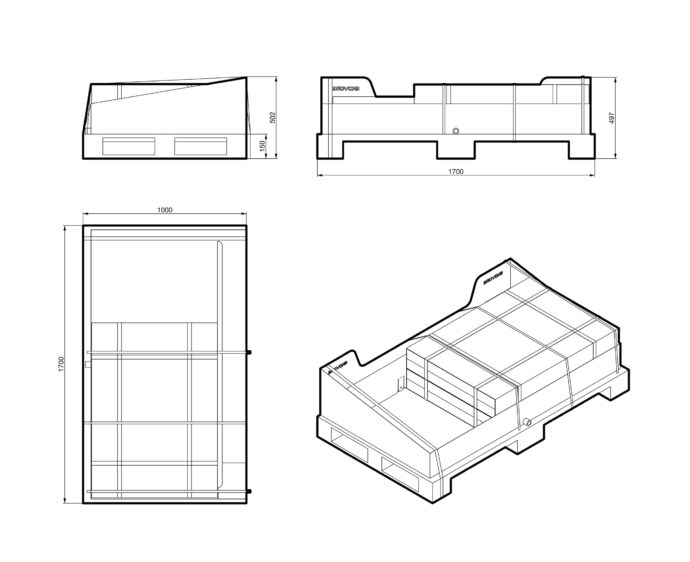
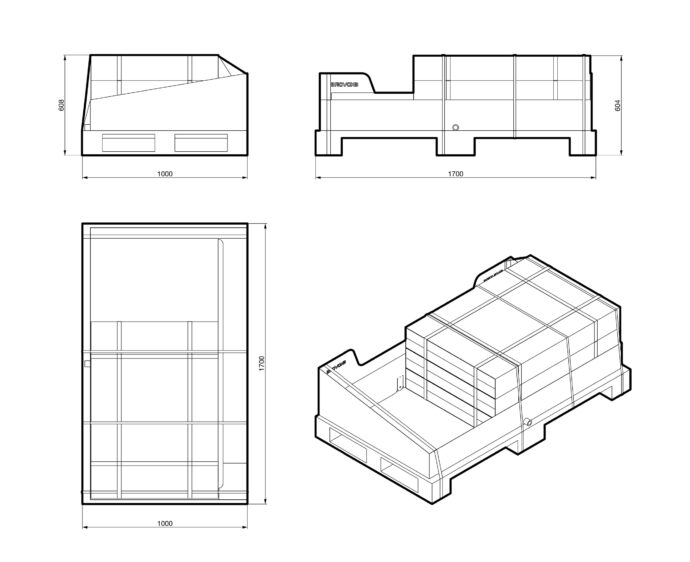
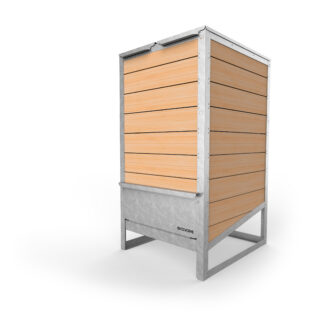
Two capacities: 2 x 500 litres or 2 x 800 litres
Capacity: 2 x 500 litres Capacity: 2 x 800 litres
Option | Automatic leachate pumping system
Automatic leachate pumping system (optional)
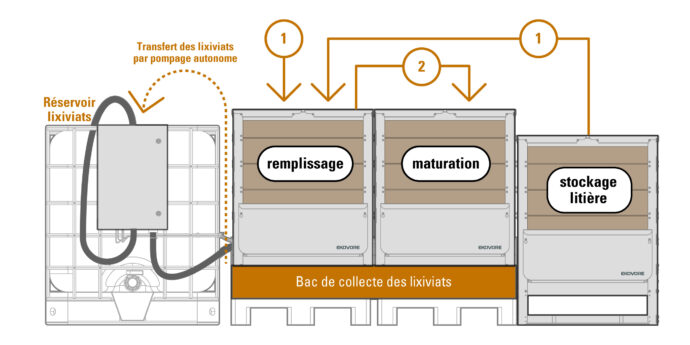
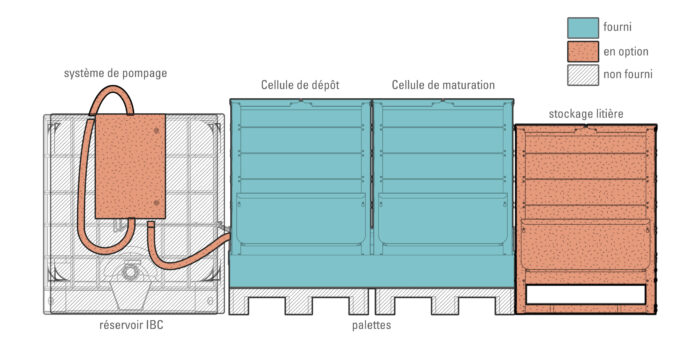
The Ekovore above-ground dry toilet composter is also available with an automatic leachate pumping system. A level sensor automatically triggers the transfer of leachate from the collection tank to a dedicated IBC container — without the need for manual intervention.
Two 500-litre tanks for filling and maturation, plus an optional third tank for storing bedding
Leachate collection tray positioned beneath the cells, with automatic level detection
Built-in transfer pump: automatic transfer to a dedicated IBC, without the need for manual intervention
Recommendations
Check periodically that the pump is working properly and that the IBC is full.
Ensure regular monitoring of the composting process and leachate management.
Main advantage
Fully autonomous leachate management: the pump starts automatically, without the need for supervision or intervention.
500-litre and 800-litre shipping sizes
FAQ
Frequently Asked Questions
Can this compost bin be installed in town, on a concrete patio?
Yes. It is precisely its above-ground design that sets it apart from traditional compost bins. It does not need to be in contact with permeable soil and can be placed on concrete, tarmac or paving, in a building’s courtyard or on a terrace.
How long does it take for the materials to compost?
Two full years of maturation are required to ensure that pathogens are eliminated. The dual-chamber system allows for continuous operation: whilst one chamber fills, the other matures and stores
What is leachate and how is it managed?
Leachate is the liquid produced by the decomposition of organic matter. The system collects it by gravity into a dedicated tank, which can be connected to the sewerage network. An optional battery-powered pump automatically transfers it to an IBC storage container. It can then be reused as a diluted liquid fertiliser.
Is this device rodent-proof?
Yes. The above-ground design, the structure of the cells and the retention tank incorporate protection against rodents, a common problem in urban courtyards.
How many people is this compost bin designed for??
The size of the unit depends on how often the dry toilet is used. Contact us for a unit tailored to your project — whether it’s a block of flats, a cultural venue, a business or a local authority.
Is regular maintenance required?
Regular monitoring is recommended: cover the material with a layer of breathable mulch after each deposit, replenish the seeding bed with living soil, and check the leachate levels. No complex mechanical operations are required.
Is it permitted to install composters for dry toilets in a garden?
Oui, l’installation de toilettes sèches avec compostage est autorisée, sous réserve de respecter certaines règles sanitaires et de gestion des sous-produits. Les matières solides doivent être compostées sur une durée minimale de deux ans afin d’éliminer les agents pathogènes et garantir un compost stabilisé. La gestion des matières liquides (lixiviats) dépend du type d’assainissement : en assainissement collectif, le bac de lixiviats peut être raccordé au réseau d’eaux usées (et non aux eaux pluviales) ; en assainissement non collectif, il est nécessaire de se rapprocher du SPANC pour validation. Reference materials set out the regulatory framework: Documentation RCC RAE documentation It is also possible to treat greywater from the composter on the plot, for example via a wood filter: Pierre et Terre documentation Finally, depending on the local context, it is recommended to check the rules with the town hall and/or the SPANC.
Reviews
There are no reviews yet.
Be the first to review “COMPOSTING TOILET” Cancel reply
Nous utilisons des cookies pour vous garantir la meilleure expérience sur notre site web. Si vous continuez à utiliser ce site, nous supposerons que vous en êtes satisfait.

 Capacity: 2 x 800 litres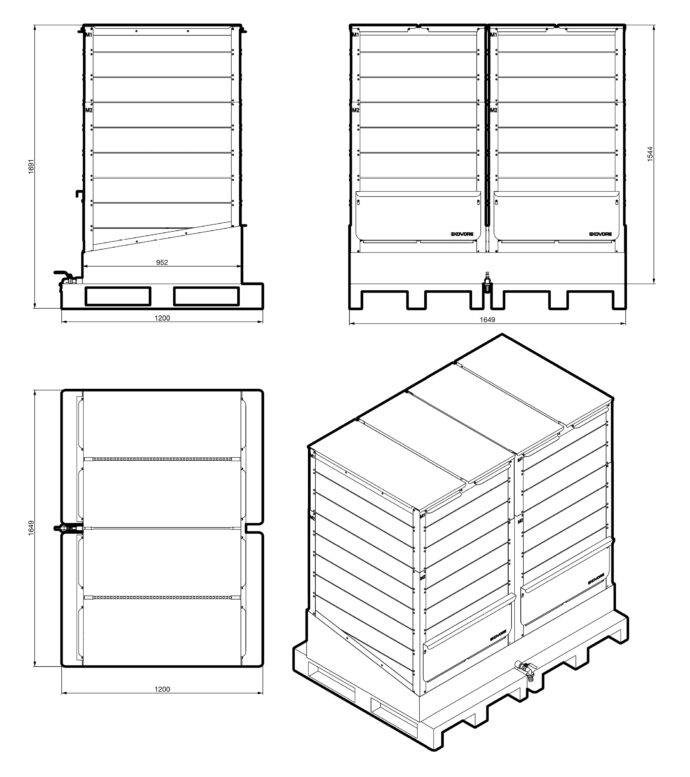
Reviews
There are no reviews yet.