Description
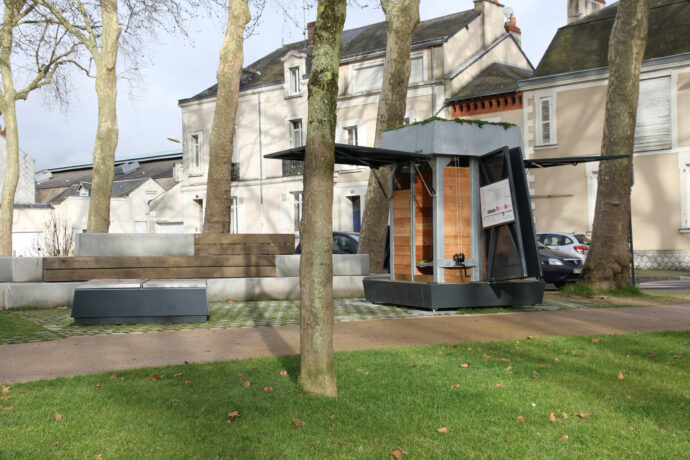
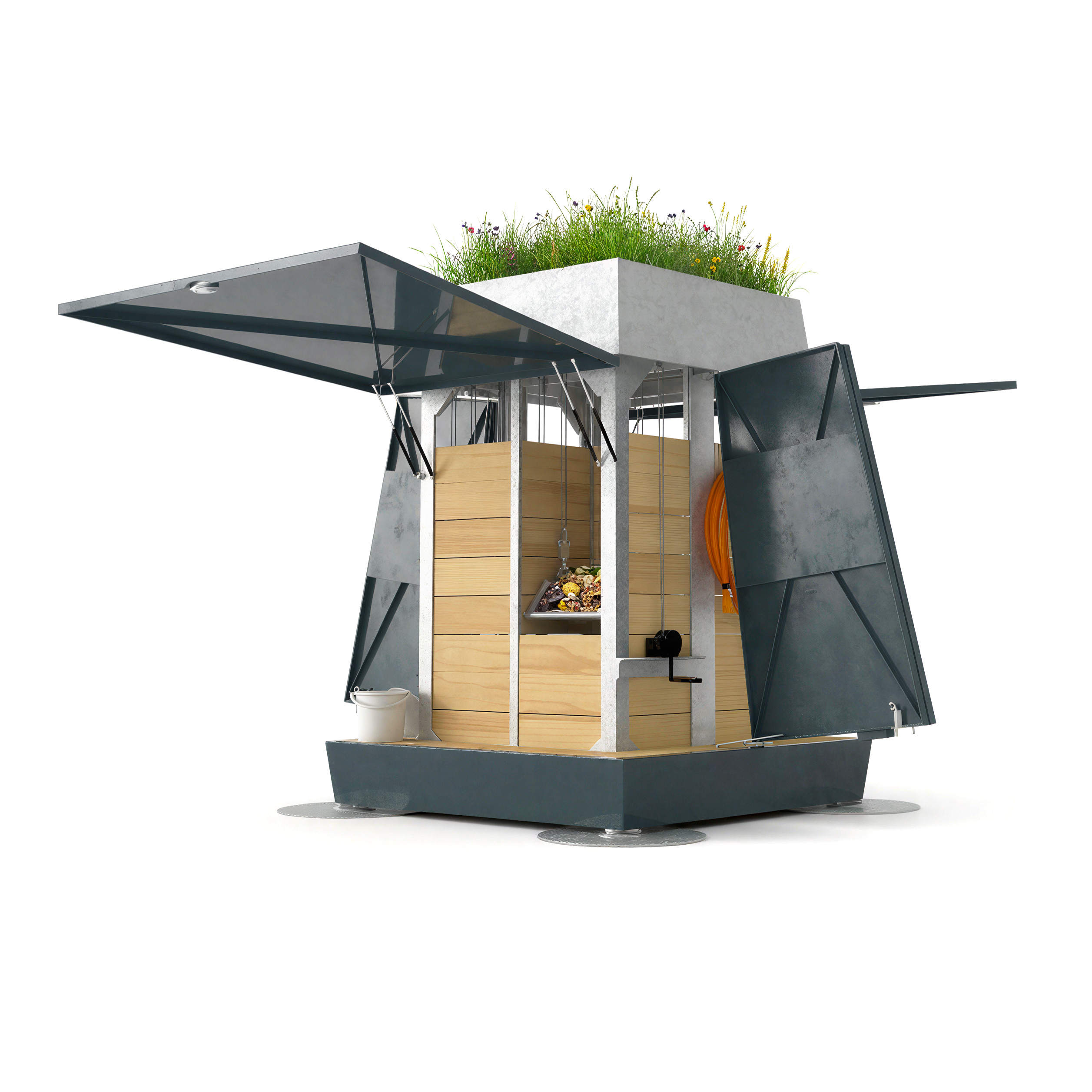
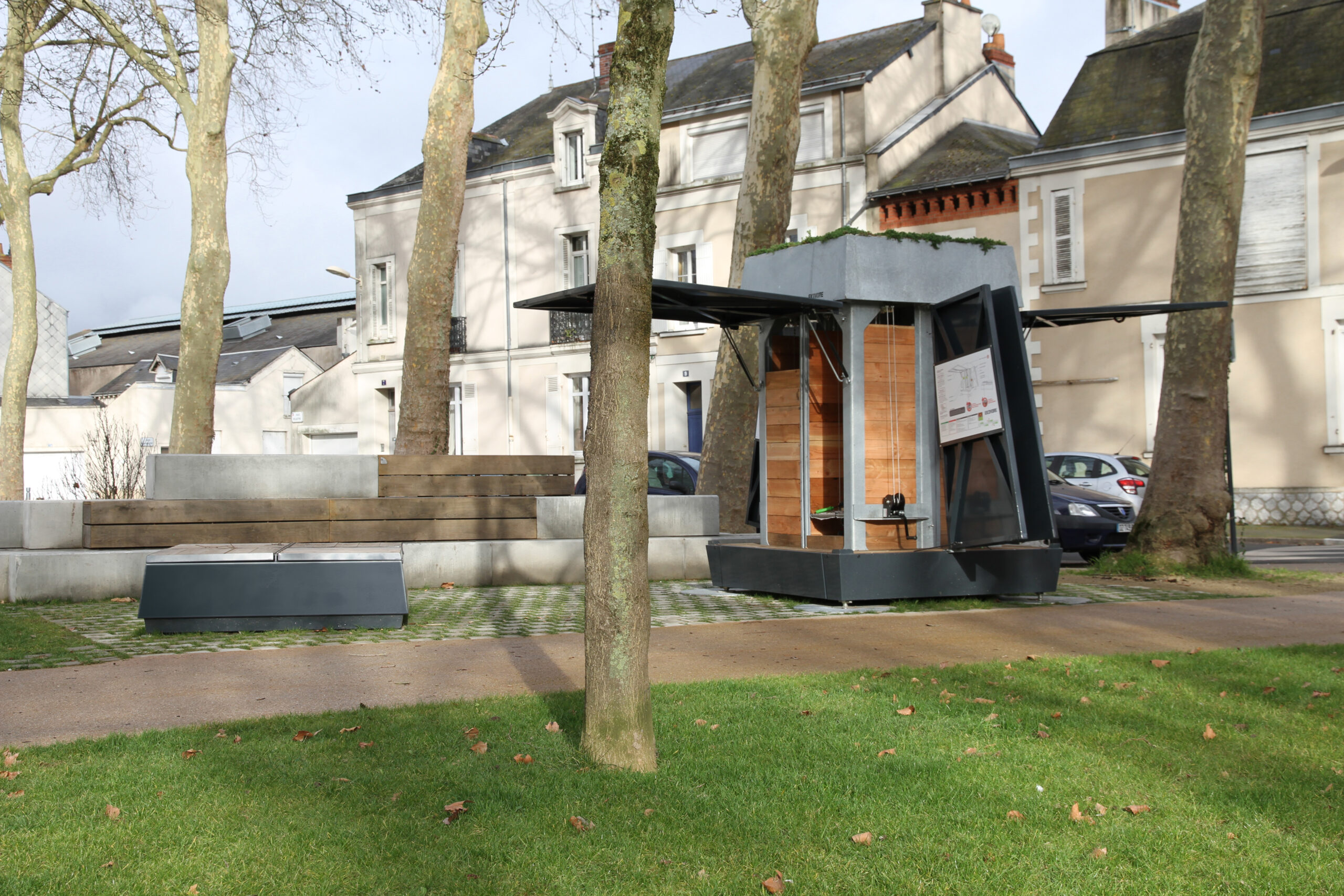
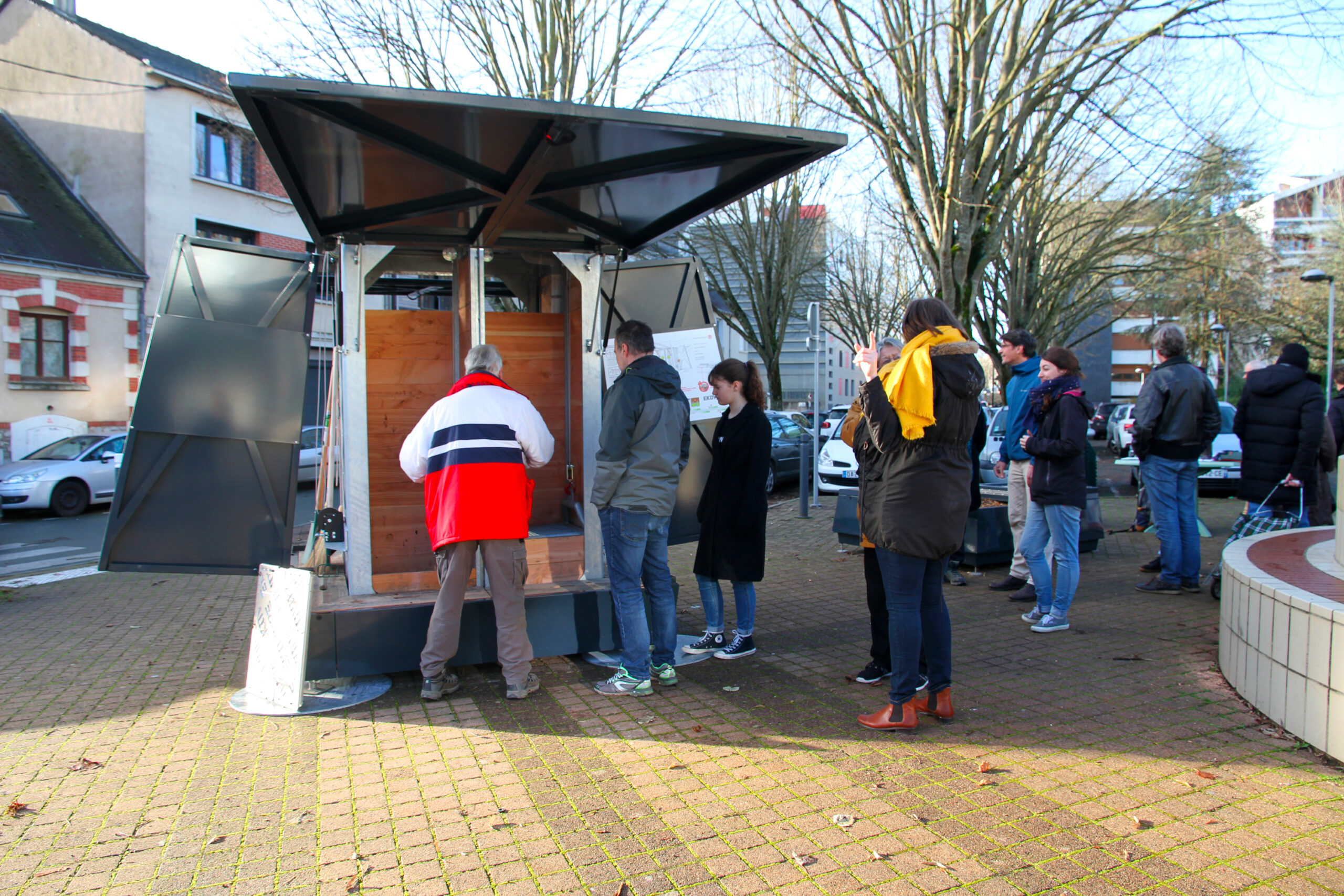
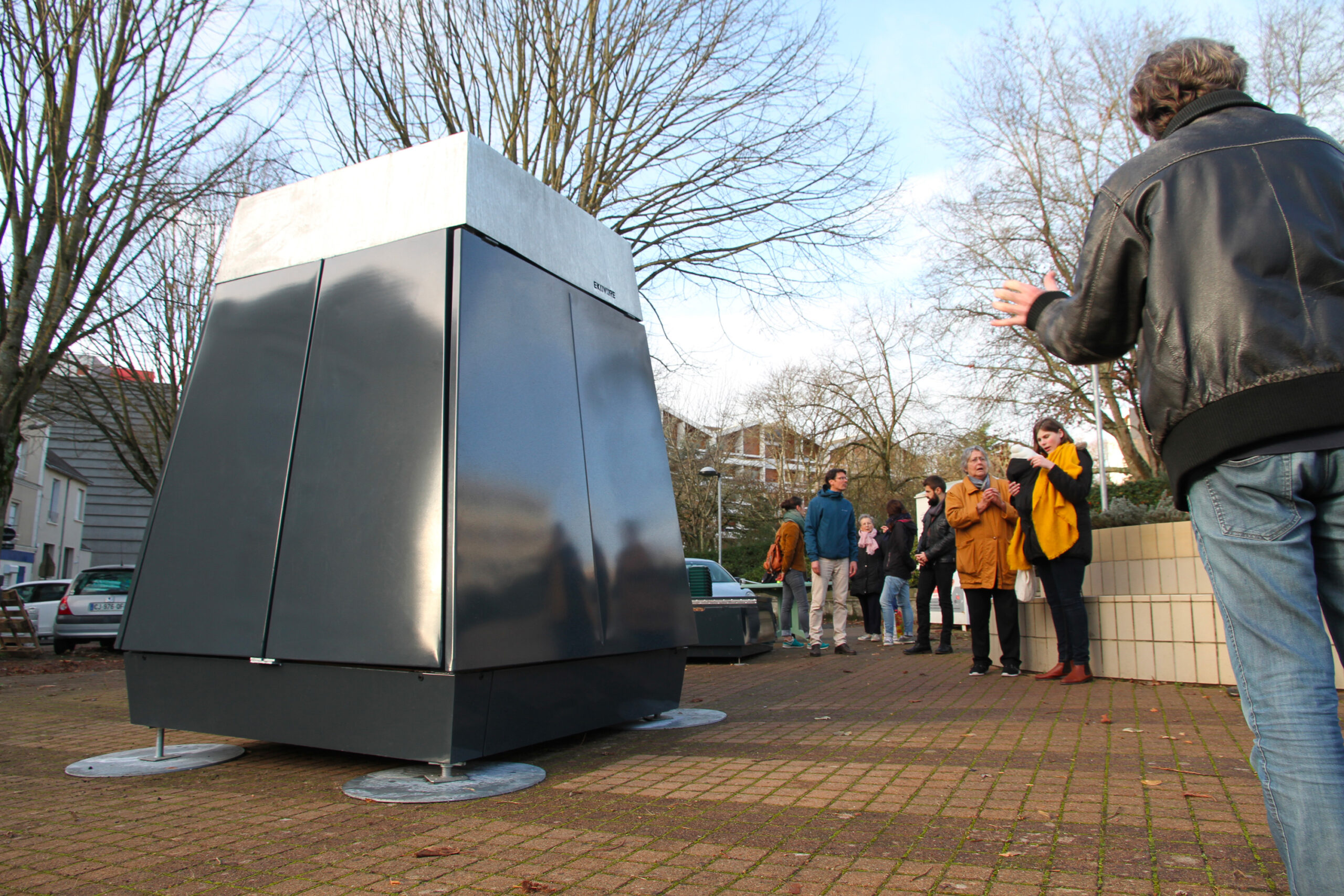
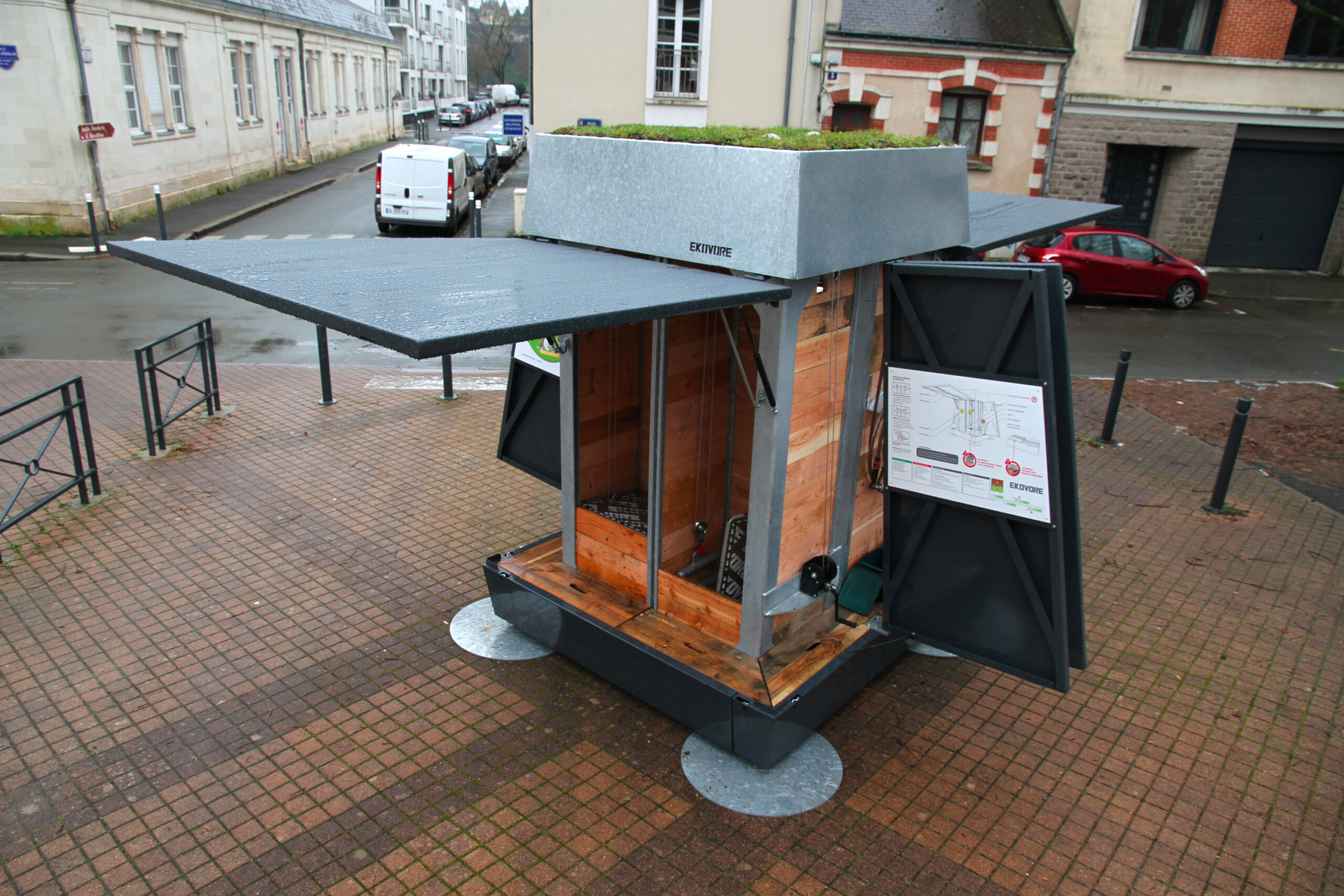
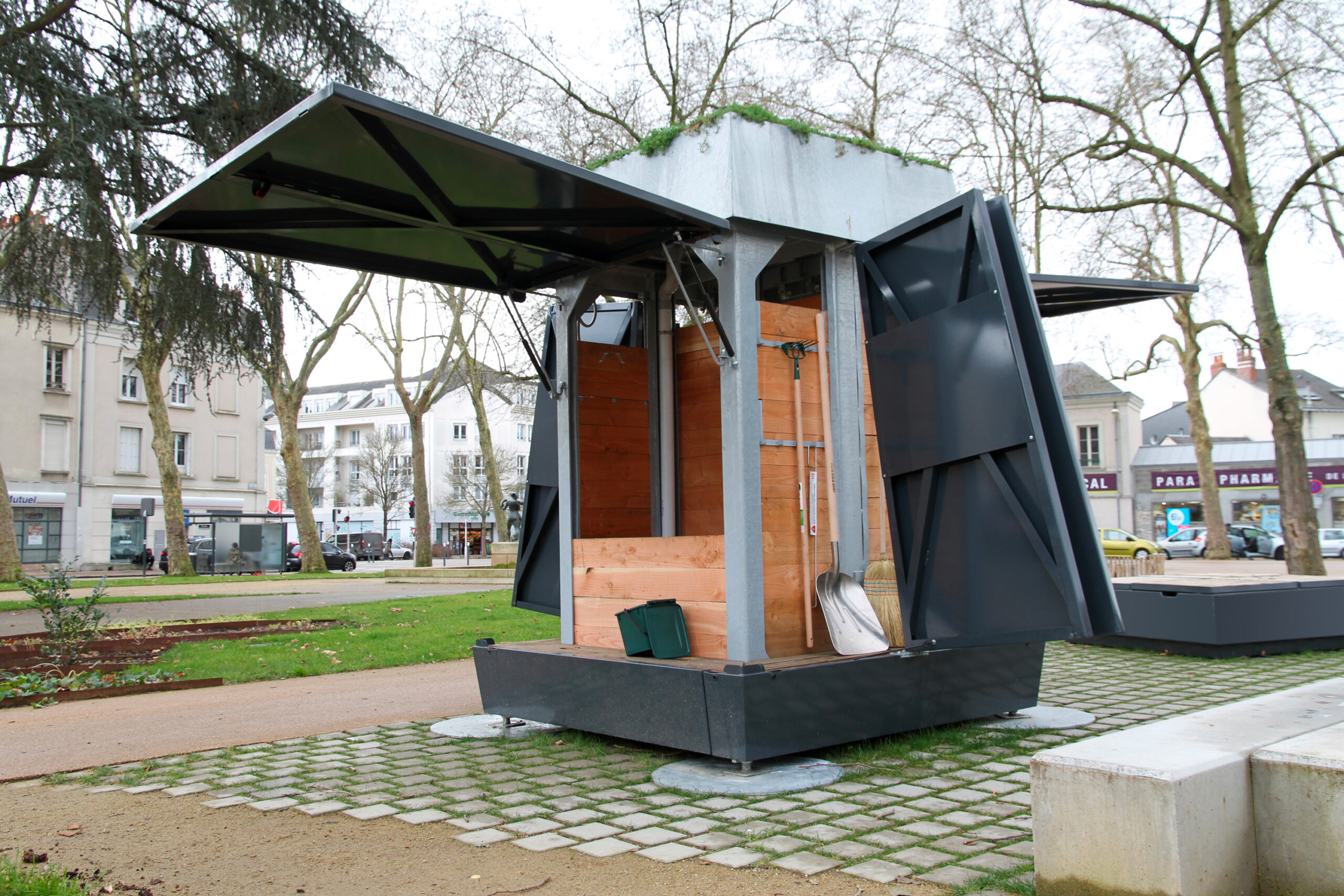
The Ekovore community composter is an urban composting pavilion designed to process the organic waste of 50 households on-site. It integrates seamlessly into public spaces and shared gardens, serving as a piece of street furniture. Its compost elevator, manually operated with a trowel, simplifies turning the compost between the deposit and maturation zones, requiring minimal physical effort. Its green roof collects rainwater to moisten the compost and facilitate cleaning the compost bins. Made in France, it operates on all types of soil. A composting coordinator is welcome to provide training and oversee the delivery of organic waste, ensuring healthy and consistent compost.
How it works: the compost elevator
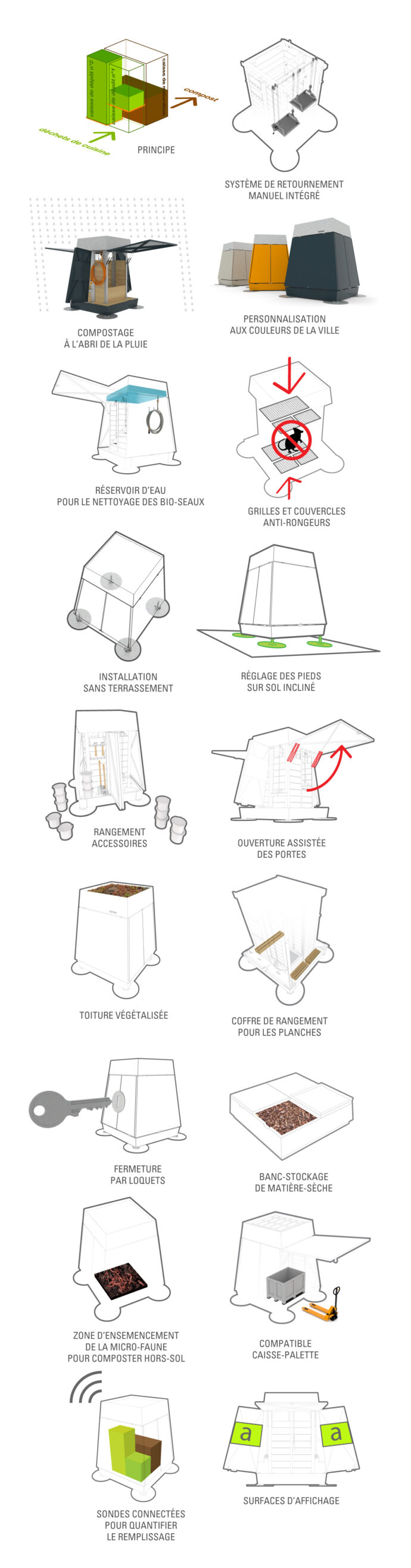
The compost elevator is the central feature of the facility. It allows for the manual transfer of organic matter from the deposit area to the maturation area without strenuous physical turning. This mechanism reduces musculoskeletal disorders (MSDs) among the composting staff and simplifies the site’s daily management.
Green roofs and rainwater harvesting
The green roof serves two complementary functions. It collects and stores rainwater to moisten the compost if needed. It also allows for easy rinsing of the compost bins brought in by residents, thus reducing odors and improving the user experience.
Rodent protection and urban integration
The kiosk’s structure protects the compost from rodents on all sides. Its urban furniture design allows it to blend seamlessly into public spaces and condominium courtyards without detracting from the surrounding aesthetics. It is therefore particularly well-suited to urban projects that prioritize the visual integration of shared amenities.
Installation and best practices
The composter can be installed on any type of soil, without any special preparation. Also, follow the ADEME’s technical recommendations to ensure rich and stable compost.
Collective compost!
A micro-factory to valorize your bio-waste into fertilizer!!
Placed in a public space, this composter makes it possible to collectively reduce bio-waste in a proportion of 3 to 1. Each year, this shared composter makes it possible to absorb 5 tonnes of bio-waste from 50 households and reduce it into 1.5 tonnes of compost. This quality compost is made available to residents who want to feed planters, vegetable gardens or even public green spaces.
Users
Local authorities wishing to develop a policy of reducing waste at source and significantly and at a lower cost reduce the amount of waste buried and incinerated. Citizens, city dwellers, who, not having a garden, wish to compost their kitchen waste. Taxpayers, who wish to reduce their incentive fee when it is in place in their municipality. Consum’actors, who know that composting at source releases ten times less CO2 than the collection of bio-waste. Other local players: companies, establishments with collective catering, commercial catering and hotel-restaurants, large and medium-sized supermarkets, large food retailers, structures developing shared composting.
Landscape integration
Issues of urban integration are central today, and the composter is no exception. It is essential that the composting function be introduced into the urban landscape by proposing a discreet and compact device. These new environmental gestures related to sorting can operate provided that the action of composting is comfortable and rewarding. Elegance, but also the functional quality of the equipment, are essential.
This shared composter is designed for private and public spaces, squares, sidewalks, condominium courtyards, parks, parking lots, public gardens, etc. It is designed to blend seamlessly into the built environment, landscapes, and architecture of your buildings. Its outer envelope is customizable according to the RAL color chart. It thus offers optimum urban integration in compliance with the recommendations of local urban plans.
FAQ
Frequently Asked Questions
How many households is this composter designed for?
The Ekovore communal composting pavilion is designed for 50 households. For condominiums or larger sites, the modular model allows capacity to be adapted by combining several modules.
Is a compost coordinator absolutely necessary?
Yes. Each opening of the kiosk must be supervised by a composting expert trained in the proper functioning of the system. This expert ensures the quality of the inputs, the carbon/nitrogen balance, and the moisture content of the compost.
What is the difference between this composting pavilion and the Ekovore modular collective composter?
The communal composting pavilion is a structure equipped with a compost elevator and a green roof. Designed as a piece of street furniture, it serves 50 households. The modular composter offers a more flexible solution, combining multiple units and suitable for sites with potential for growth or less aesthetically constrained spaces.
Will the composter work on concrete or impermeable ground?
Yes. It can be installed on any type of ground without prior work, making it suitable for paved, concrete, and asphalt public spaces.
How is the green roof maintained?
The roof is planted with low-maintenance vegetation, generally drought-resistant sedums. Maintenance is therefore minimal and can be carried out by the composting coordinator or the local authority’s parks and gardens department.
Does this composter comply with the requirements of the AGEC law?
Yes. It directly meets the source separation obligations for biowaste imposed by the AGEC law on all producers since January 2024, by allowing biowaste to be recovered directly on site, without separate collection or transport to an external platform.

Reviews
There are no reviews yet.