Description
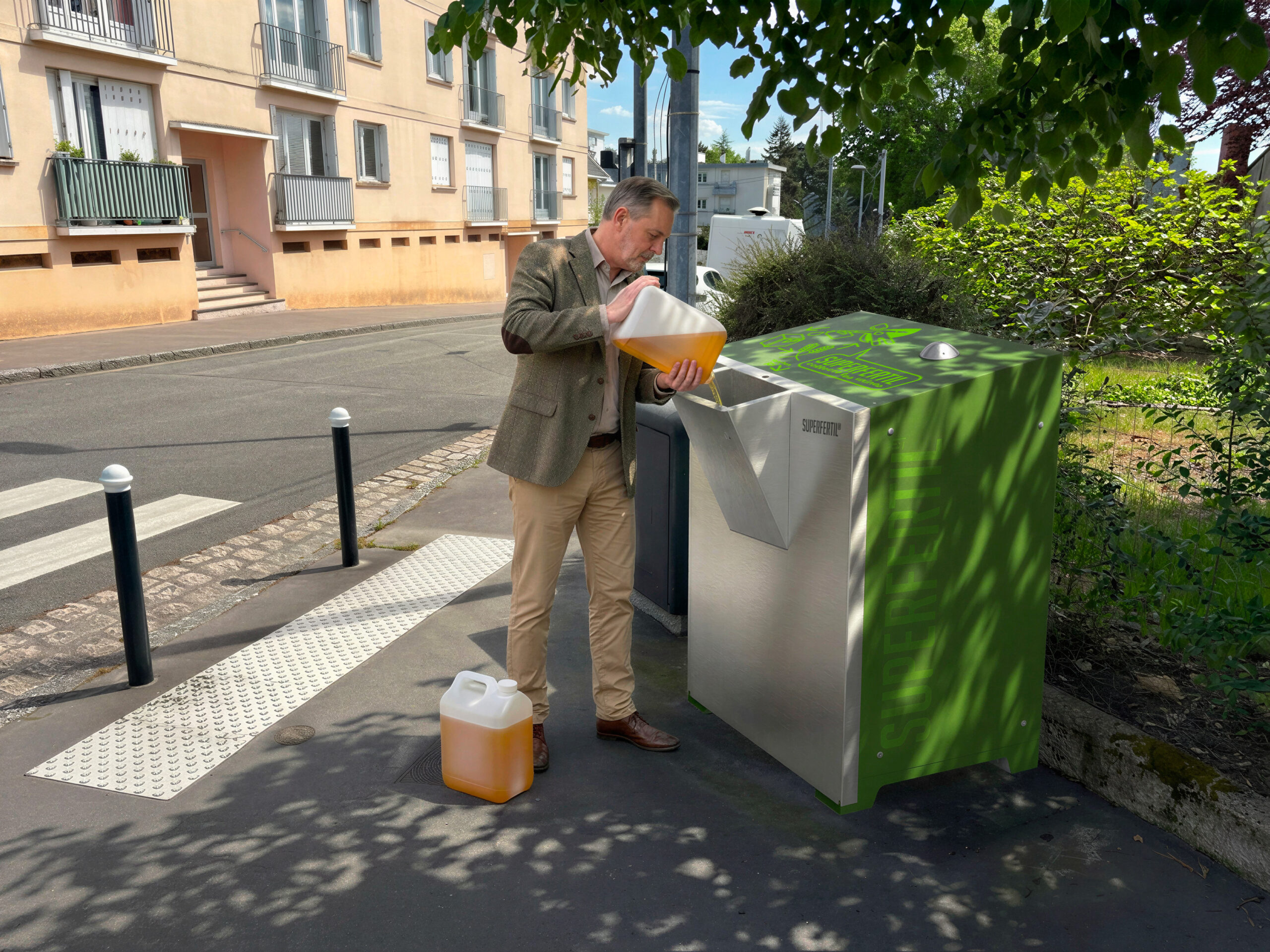
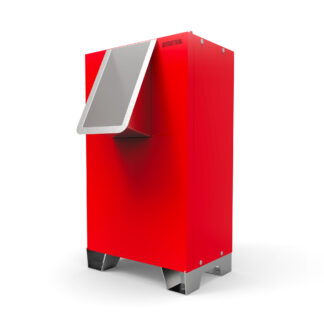
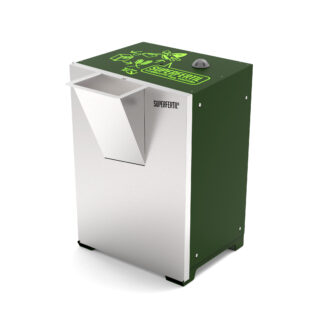
SUPERFERTIL is a voluntary urine collection point: a drop-off bin installed in a public space to enable local residents to bring in their own urine to be recycled as a natural fertiliser for agriculture. Based on the same principle as voluntary food waste collection points, SUPERFERTIL relies on civic engagement. It is the user who collects the urine at home and deposits it at the terminal, thereby closing the ecological cycle between the city and the fields. Human urine contains the three main nutrients required for plant growth: nitrogen (N), phosphorus (P) and potassium (K). It is a local, renewable and free liquid fertiliser.
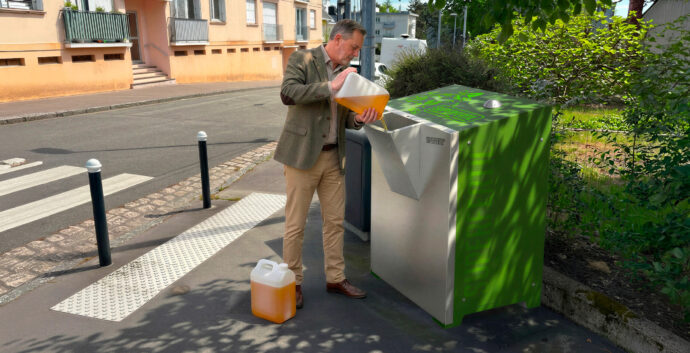
A recycling drop-off point at the heart of a circular economy
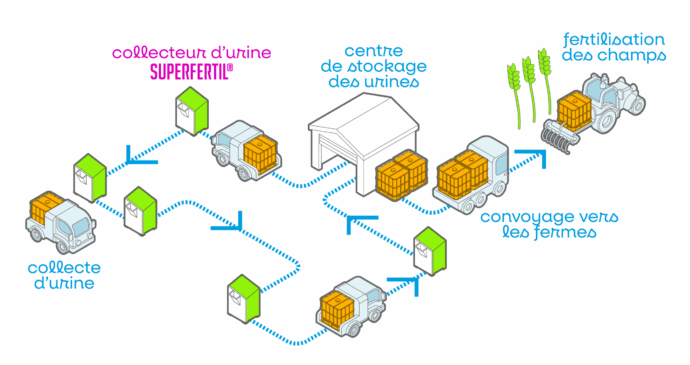
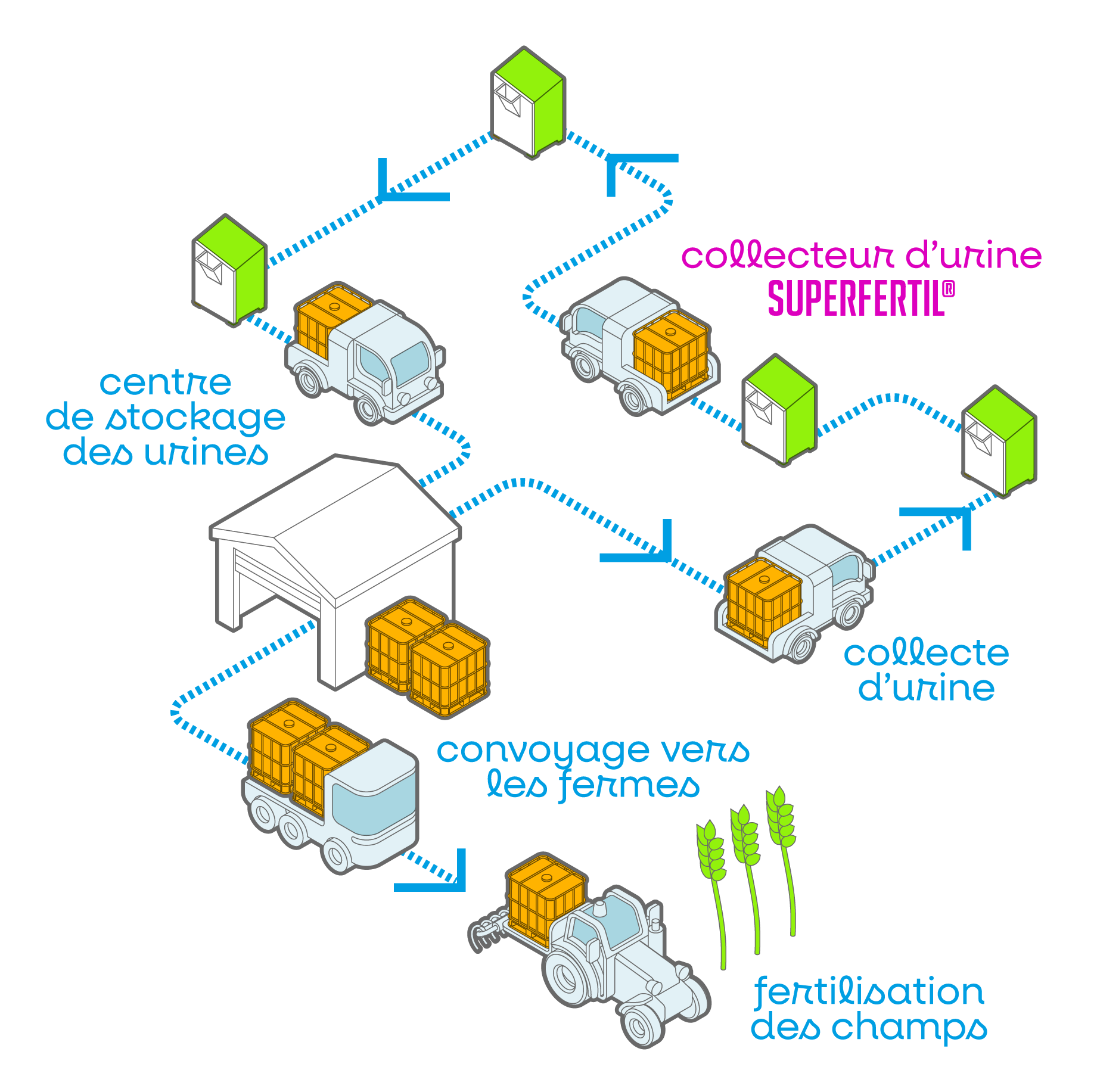
SUPERFERTIL forms part of a comprehensive process in which every step depends on the actions of local residents:
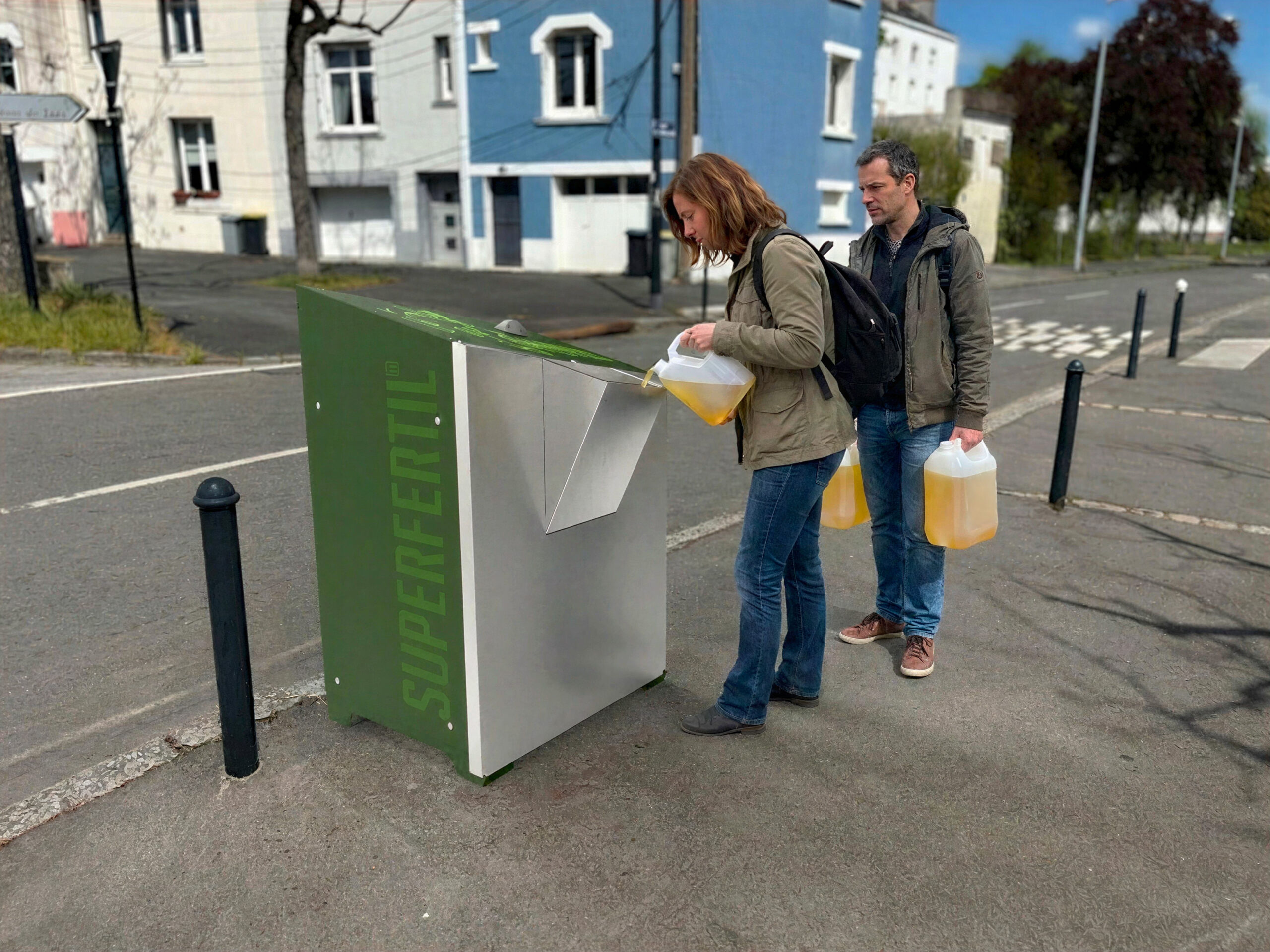
- Home collection: At home, you collect urine in a designated container, similar to a compost bin for organic waste. Once it is full, you take the container to the local collection point.
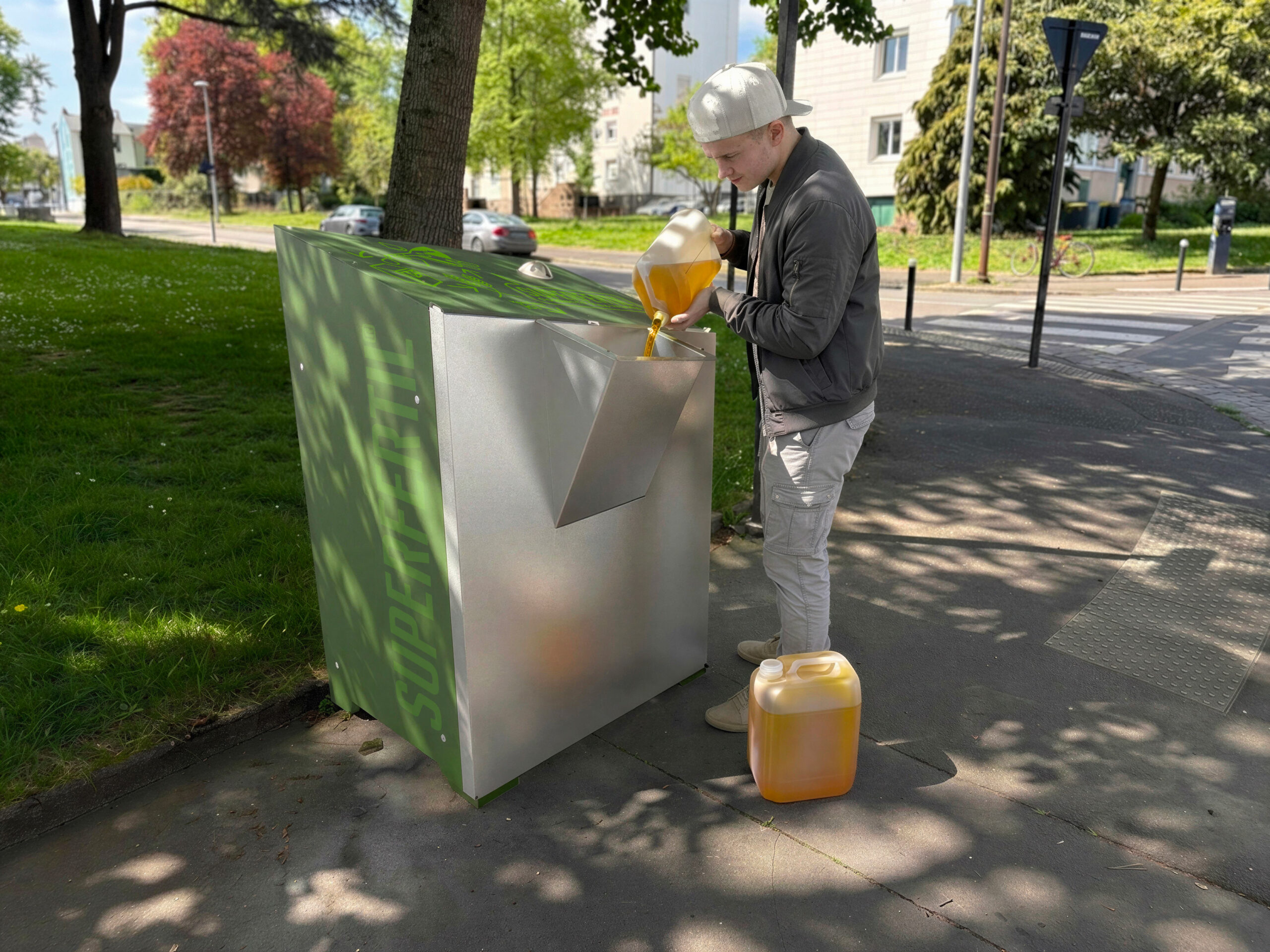
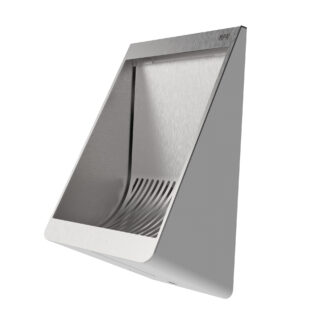
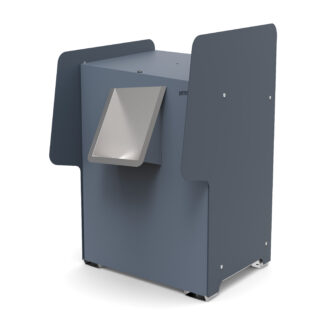
- Dispensing at the terminal: The funnel-shaped inlet allows you to empty the container easily and conveniently directly into SUPERFERTIL.
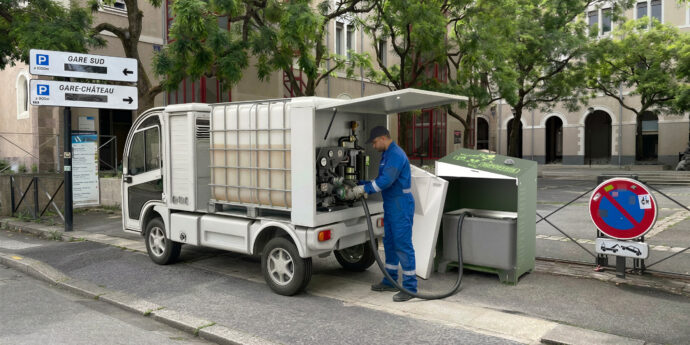
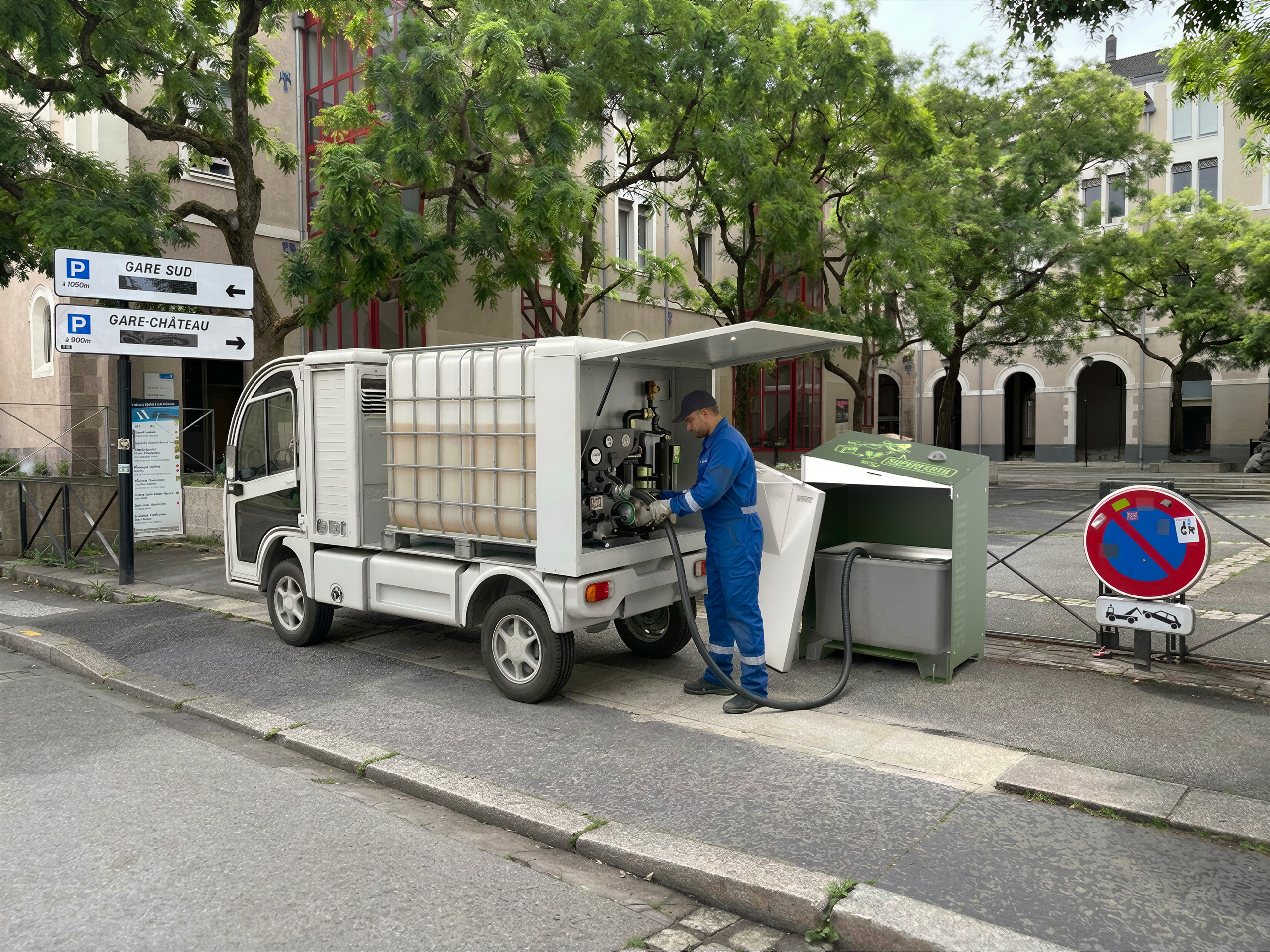
- Collection and processing — A dedicated service then collects the urine samples for storage.
- Back to the land — The partner organisation distributes the fertiliser to local farmers to fertilise their crops.
 Why set up a drop-off point for fertilising urine?
Our current system is based on an energy paradox. On the one hand, we produce nitrogen fertilisers from natural gas and imported fossil fuels. On the other, we destroy – in a process that consumes just as much energy – the very same nitrogen molecule that we have just excreted. Two processes, two energy consumptions, two sources of pollution, for a net result of zero in terms of circularity.
In practical terms, separating urine at source makes it possible to bypass this absurdity in a single step. It eliminates both the need for synthetic fertilisers upstream and the cost of disposing of natural fertiliser downstream.
 Technical characteristics
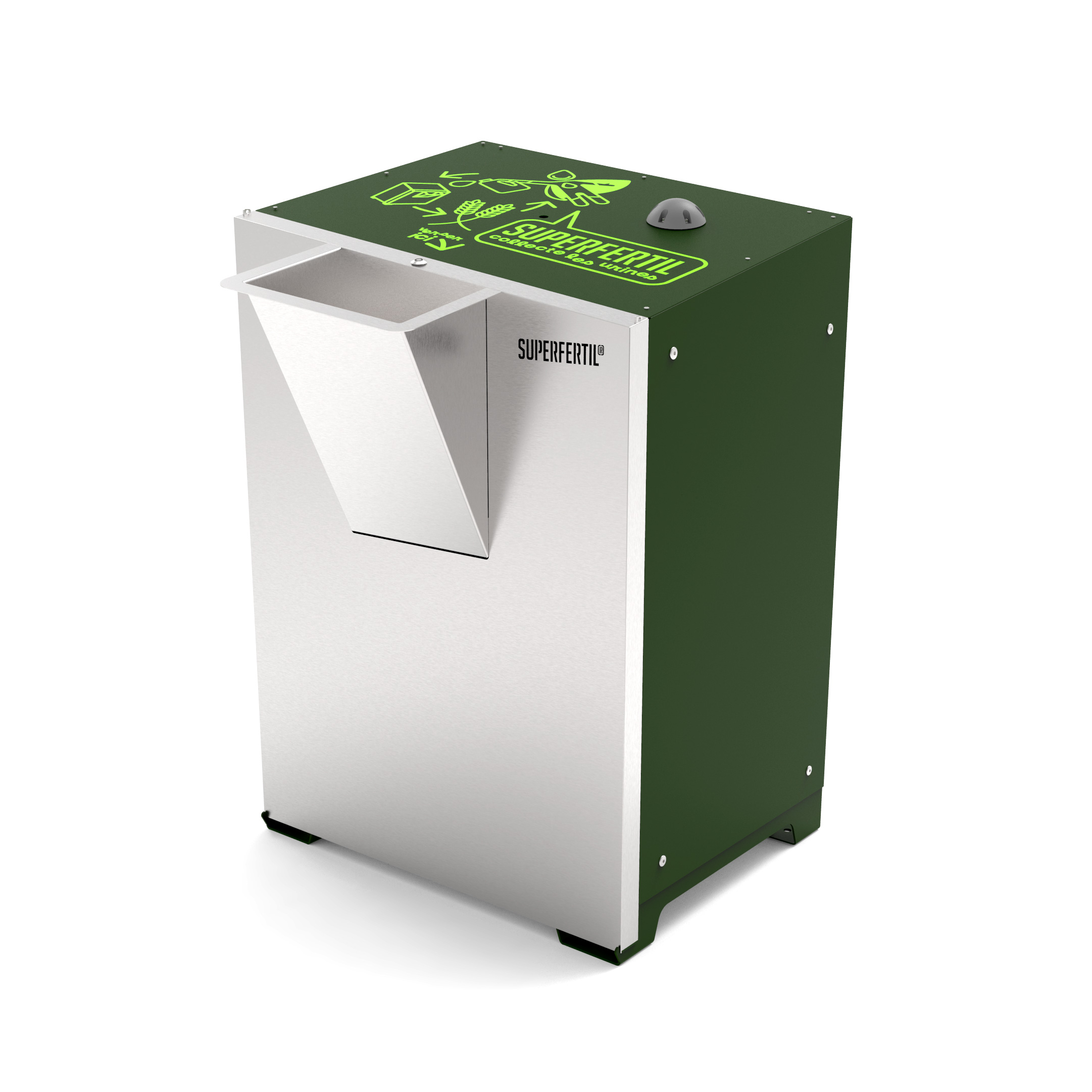
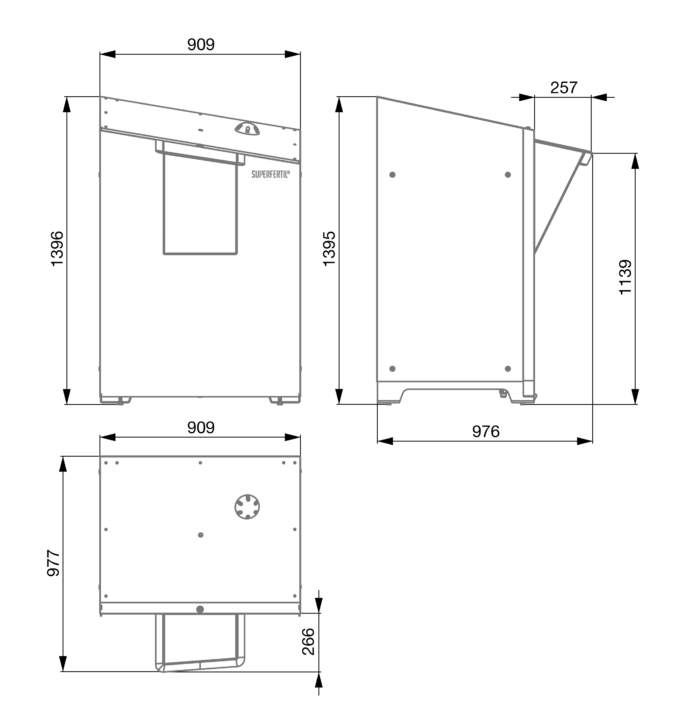
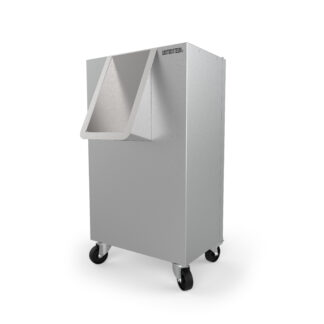
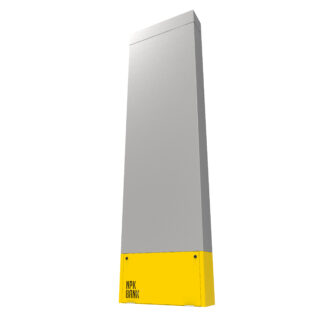
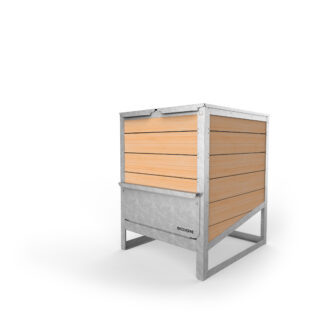
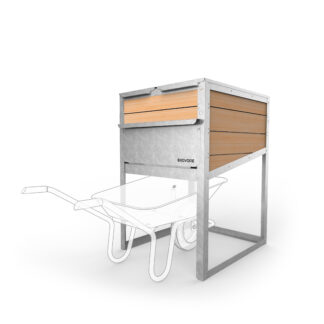
- Street furniture made of stainless steel that can be installed in public spaces, such as squares, pavements, outside buildings, in supermarket car parks or at motorway service areas.
- Funnel-shaped opening for easy filling
- Containment and stabilisation system to prevent nitrogen volatilisation and odours
- Compatible with collection systems designed for urine recovery
- A device equipped with a communication-enabled sensor to optimise collection logistics
- Capacity: 220 litres
 Who is SUPERFERTIL for?
First and foremost, SUPERFERTIL is designed for local authorities, social housing providers, urban planners, chambers of agriculture and urban service operators wishing to set up a voluntary collection point for fertilising urine at neighbourhood or city level. The collection point can be installed on the street, at the foot of a building, in a market or in any local space suitable for the collection process. It fits naturally into a local plan to reduce synthetic agricultural inputs, a regional circular economy project, or an initiative to conserve water and energy.
Also worth checking out
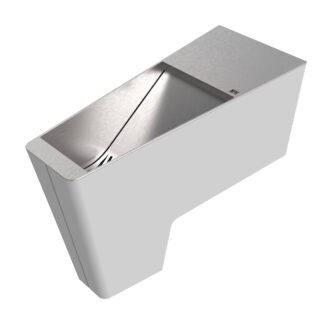
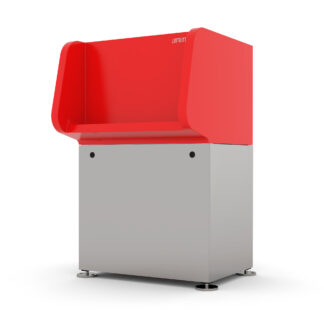
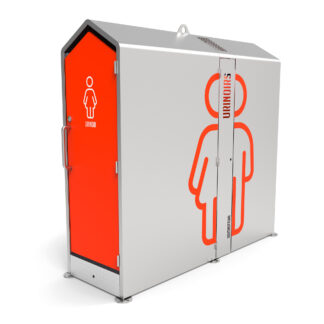
SUPERFERTIL is part of a comprehensive range of eco-friendly street furniture. Discover our Uritrottoirs for managing urine in public spaces.
Ressources
LEESU — Laboratoire Eau Environnement et Systèmes Urbains | Programme OCAPI | Utiliser l’urine humaine en agriculture
The food-waste cycle in urban areas: socio-ecological systems and transitions | Thesis by Fabien Esculier
Natural fertiliser vs synthetic fertiliser
The current agricultural system is based on a costly and polluting paradox. On the one hand, to nourish our crops, we synthesise nitrogen fertilisers from natural gas and fossil fuels — an energy-intensive industrial process that emits greenhouse gases and relies on imported resources. On the other hand, once these nutrients have been consumed and excreted, we destroy them. When mixed with water in our sewage systems, urine — despite being rich in bioavailable nitrogen, phosphorus and potassium — cannot be recovered: too diluted, it must be treated in a wastewater treatment plant using a process that is itself highly energy-intensive and a source of greenhouse gas emissions.
Globalised linear system
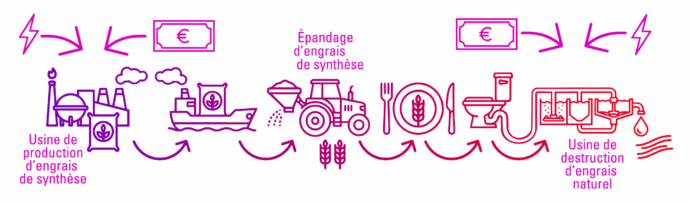 The result: two factories at opposite ends of the same food chain, each consuming energy and fossil resources — one to produce fertilizer, the other to destroy the exact same molecule. Two sources of pollution, two bills, zero circularity.
Separating urine at source puts an end to this absurdity in a single step. By capturing the nutrients before they are diluted, it simultaneously eliminates the need for synthetic fertilisers upstream and the cost of disposing of them downstream. Urine ceases to be waste to be treated: it becomes once again what it should never have ceased to be — a local, renewable and free fertiliser.
Local circular system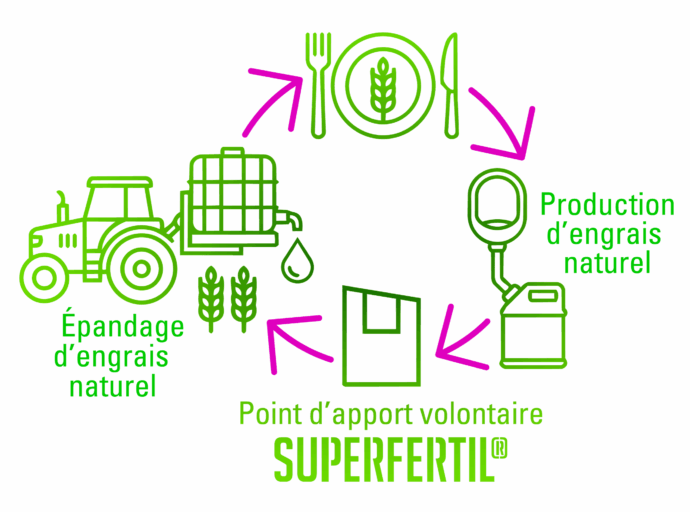
FAQ
Frequently Asked Questions
What is the SUPERFERTIL terminal used for?
SUPERFERTIL is a urine collection point designed for agricultural fertilisation. It enables residents to voluntarily participate in a nutrient recycling scheme by depositing their urine at a dedicated collection point. This “fertile gesture” helps to produce a local, renewable fertiliser that is useful for agriculture.
How does the process of returning residents’ urine to the soil work?
A collection service regularly empties the tanks at the SUPERFERTIL stations. A connected sensor monitors their fill levels and helps to optimise collection routes. The collected urine is then sanitised and stored before being reused in agriculture, as part of a short supply chain approach.
Why collect human urine?
Against a backdrop of international tensions over synthetic fertilisers, urine is a valuable resource for agriculture. It naturally contains the key nutrients required for plant growth: nitrogen, phosphorus and potassium. The reuse of urine offers a local, environmentally friendly and practical alternative.
How do you do it at home?
There are several simple ways to collect your urine on a daily basis:
- Dry urinals (for men and women) connected to a dedicated tank
- DIY systems made from plastic bottles that have been cut up and assembled
To minimise odours, it is recommended that you acidify the urine using either a small amount of powdered citric acid (4 g/L) or household vinegar (1 tablespoon per litre), both of which are readily available in chemists or the cleaning aisle of supermarkets.
Where can I find a urine collection point?
Local authorities may install SUPERFERTIL recycling points in public spaces as part of a scheme to recover nutrients locally. Contact your local council to find out whether this type of scheme is being considered or could be introduced in your area.
Are there any drop-off points for motorists and lorry drivers?
SUPERFERTIL drop-off points may be installed at motorway service areas and along major roads. Large numbers of plastic bottles containing urine are currently found along roadsides. To prevent this environmental pollution and reduce collection costs, drivers will eventually be able to easily dispose of their urine at a SUPERFERTIL drop-off point.
Can shops and public-facing establishments obtain the necessary equipment?
Yes, shops and public-facing establishments will be able to install SUPERFERTIL collection points, particularly in their car parks. These collection points will allow users to dispose of their urine as part of their daily routine, without having to make a special detour, whilst contributing to a local circular economy initiative.
Does urine give off a foul smell when handled or stored?
No, provided you follow a few simple rules. Fresh urine has very little odour. Unpleasant smells mainly arise when it is left to stand in unsuitable conditions, particularly due to bacterial activity that breaks down certain compounds into odorous gases (including ammonia).
To avoid this, simply follow these basic principles:
- Use a clean container: urine collected in a clean container remains stable for much longer
- Seal tightly: a simple lid prevents odours from escaping
- Stabilising urine: adding a small amount of citric acid (around 4 g/L) or household vinegar (1 tablespoon per litre) helps to acidify the solution, limit the volatilisation of ammonia and slow down bacterial activity
These best practices effectively prevent unpleasant odours from developing during storage and handling.
Does a urine collection point produce unpleasant odours?
No, a recycling point does not produce unpleasant odours when it is properly designed and maintained.
Odours mainly occur when urine is stored in poor conditions. SUPERFERTIL units incorporate simple yet effective measures to prevent this:
- A sealed tank that prevents odours from escaping
- Regular collection, optimised by a level sensor
- Urine stabilisation to minimise odour formation
As with domestic use, odour control depends on cleanliness, leak-proofing and the stabilisation of urine. When properly managed, these systems are perfectly suitable for use in public spaces.

Reviews
There are no reviews yet.