Posted on — Leave a comment

SUPERFERTIL: an advertisement for water and nitrogen!

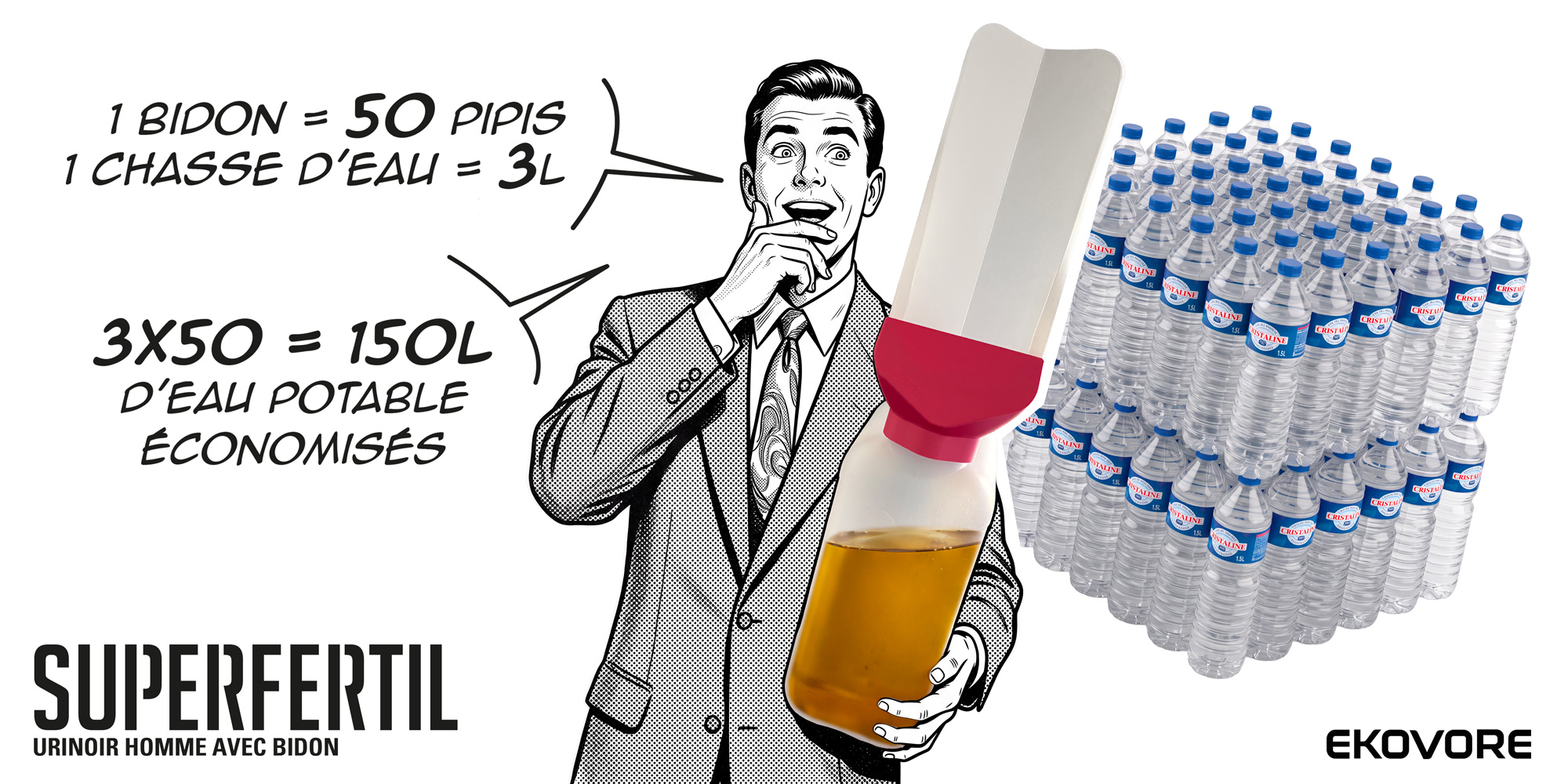
Réclame illustrée pour l’urinoir SUPERFERTIL : un homme s’émerveille devant les économies d’eau, avec les messages « 1 bidon = 50 pipis », « 1 chasse d’eau = 3 L » et « 3 × 50 = 150 L d’eau potable économisés ».

A urinal atop a canister—that certainly deserves an advertisement. To mark the launch of SUPERFERTIL, we’ve chosen to revisit the classic style of advertising: expressive characters, quirky situations, a simple concept, and tangible benefits.

Behind these small scenes, inspired by 1950s American comic books, lies a single intention: to bring visibility to resources that we are otherwise accustomed to discarding.

150 liters of drinking water saved

A container full of urine represents about 50 individual instances of urination. By avoiding the use of 3 liters of flush water each time, this amounts to 150 liters of drinking water saved.

Plenty to get excited about, don’t you think?

By collecting urine separately, SUPERFERTIL eliminates the need for flushing. The concept is simple: a waterless urinal attached to a removable container. There is no flushing mechanism and no connection to a drainage system. Once the container is full, it can simply be moved, allowing for the potential repurposing of its contents.

Nitrogen for the garden

But the benefits of collection go beyond water savings.

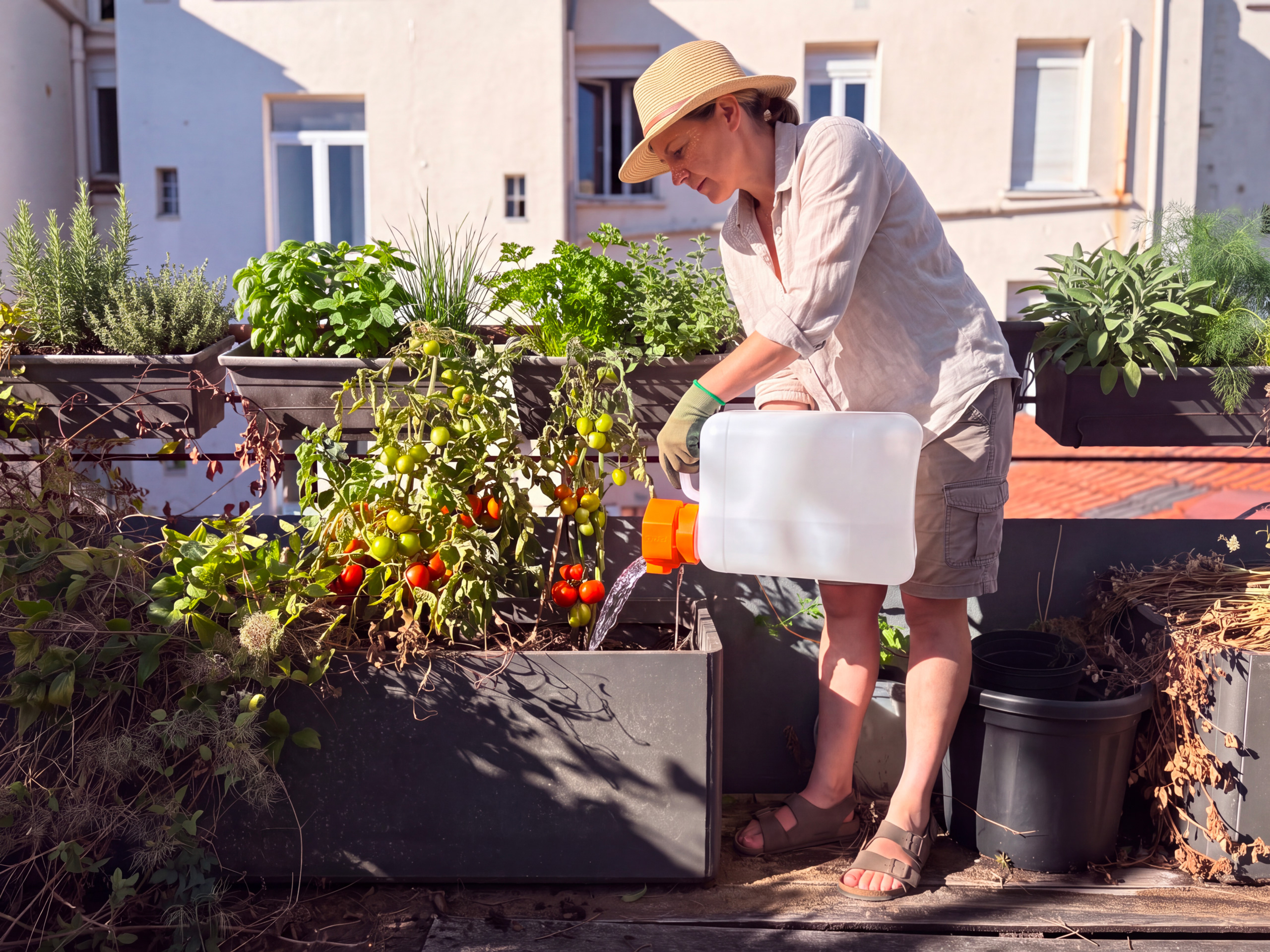
Urine naturally contains nitrogen, an essential nutrient for plant growth. If collected separately, it can serve as a resource for fertilizing the garden, rather than being flushed away with wastewater.

This is the other subject of our advertisement: a woman discovers that her container holds something that can help fertilize her garden—an unexpected use for a resource rarely viewed in this light.

However, this form of utilization requires adherence to good usage practices, particularly with regard to dilution.

Changing practices, renewing our collective imagination

With SUPERFERTIL, we seek to make visible certain actions and resources that our habits lead us to overlook.

Faire évoluer les usages commence parfois par changer de regard. C’est particulièrement vrai lorsqu’il s’agit de l’urine.

SUPERFERTIL is designed by FALTAZI Studio for EKOVORE.
Posted on — Leave a comment

SUPERFERTIL: A Story About a Canister

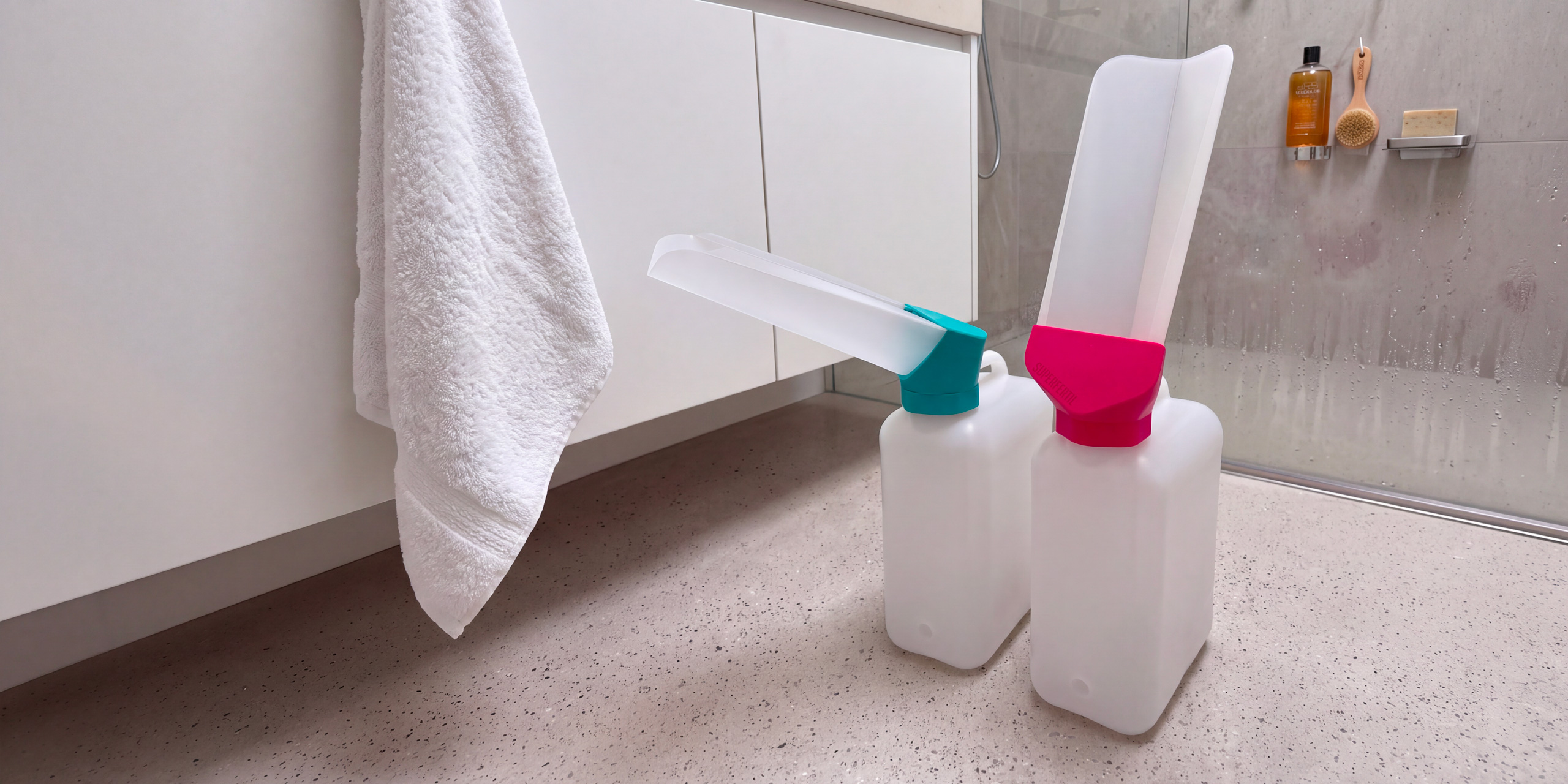
Urinoirs SUPERFERTIL Homme et Femme mobiles dans une salle de bain

Two new products are joining the EKOVORE catalog: SUPERFERTIL FEMME and SUPERFERTIL HOMME—two waterless urinals designed to collect urine directly into a container.

Genesis: a piece was missing from the system.

Last May, we launched SUPERFERTIL voluntary drop-off points—street furniture designed to collect a fertilizer we produce daily: urine.

The goal was to enable individuals to drop off their urine so that it could be collected and utilized as agricultural fertilizer.

For this collection process to work, one essential component was missing: a vessel capable of collecting the urine, storing it temporarily, and—above all—enabling its transport to the drop-off point.

The solution takes a very simple form: a urinal screwed onto a container that detaches once full, making it easy to transport.

That is how SUPERFERTIL urinals were born.

All in all… a handy little item for everyday use!

Once these new objects were before our eyes, something became obvious.

Why would their usefulness necessarily depend on a voluntary drop-off point?

Thanks to their compact design, SUPERFERTIL urinals fit easily into existing restrooms or any other room in the house, offering practical, self-contained use. They collect urine at the source, requiring neither a flush nor a connection to the drainage system.

The principle is simple: instead of mixing urine with several liters of drinking water to flush it away with wastewater, it is collected separately in a container.

No potable water used to flush away urine, and nutrients recovered rather than mixed with wastewater.

The benefits don’t stop at saving water!

Urine naturally contains nutrients, notably nitrogen and phosphorus, that are beneficial for plant growth.

Once collected, they can therefore be considered a fertilizing resource rather than merely an effluent to be disposed of.

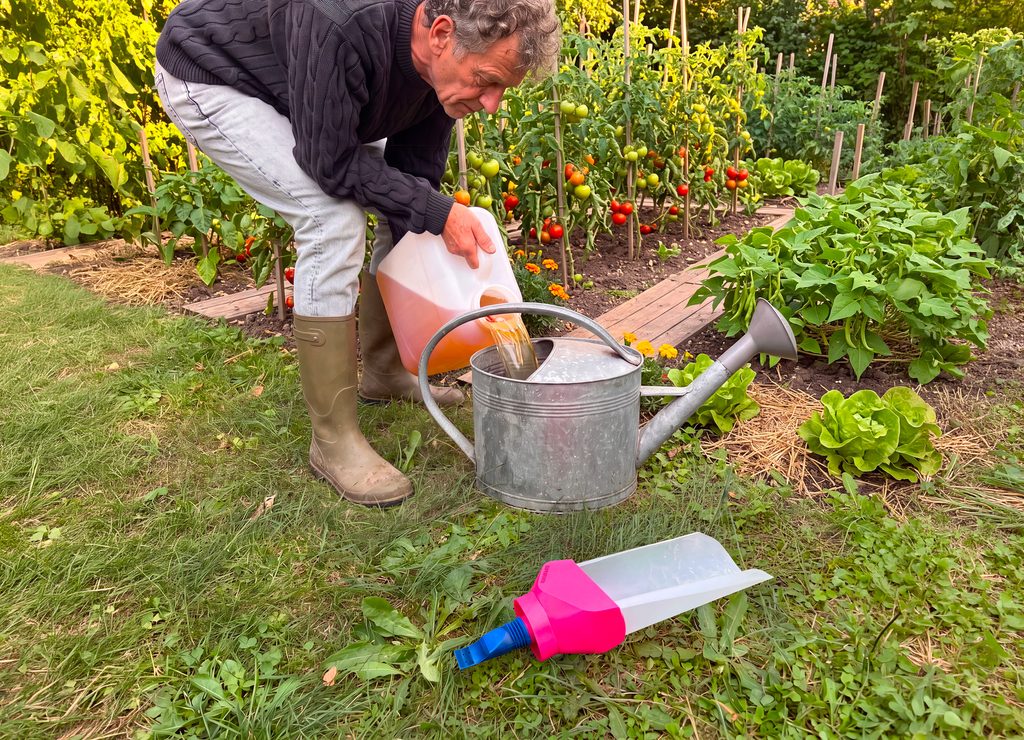
For use in the garden, the collected urine can be diluted with ten volumes of water before watering.

Two urinals, two positions

SUPERFERTIL WOMEN

SUPERFERTIL FEMME features an inclined polypropylene collection tray. It collects urine and directs it into the container.

Its 360° rotation allows it to be positioned out of the way of the feet, making it easier to squat. After use, it can also be moved to a storage position.

SUPERFERTIL FOR MEN

SUPESUPERFERTIL HOMME features a vertical polypropylene receptacle designed for use in a standing position.

The receiver can also be rotated 360°, allowing its position to be adapted to the available space and the intended use.

In both cases, the urinal is directly connected to a container intended for urine collection.

And the smells?

Collecting urine separately obviously requires being able to store it without generating odors.

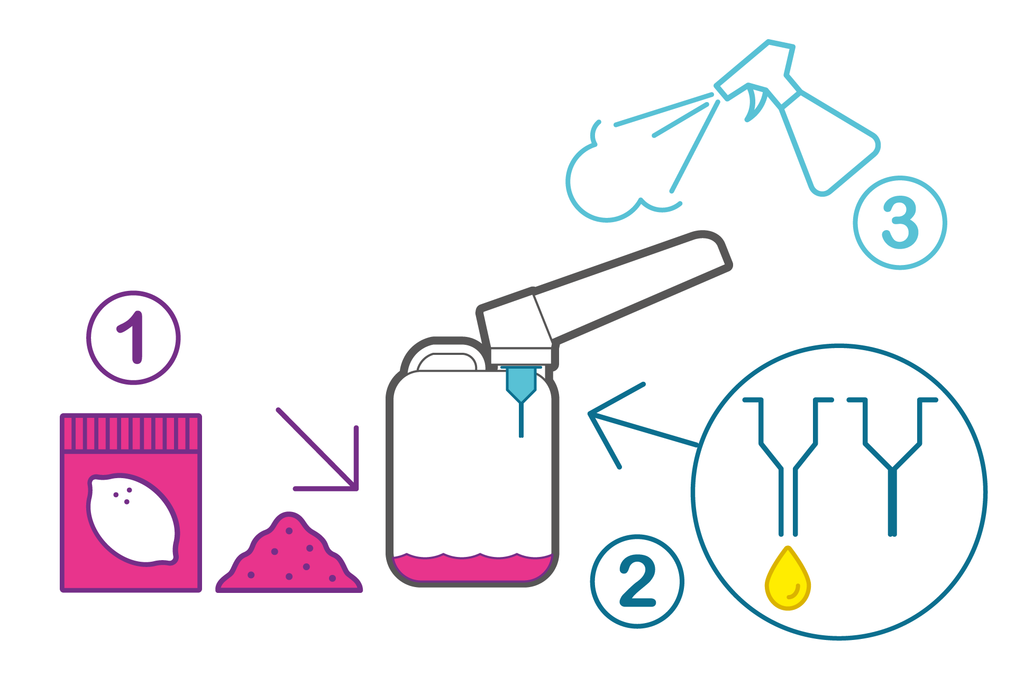
SUPERFERTIL combines three complementary devices to ensure comfortable daily use:

  • a dry trap with elastomeric flaps, which creates a barrier between the canister and the urinal;
  • prior acidification of the urine, using approximately 4 g of household citric acid per litre of urine at the start of filling the container;
  • regularly spraying the shower tray with white vinegar after use.

This combination eliminates odors under normal conditions of use.

Design less, but design right.

This approach reflects an idea we hold dear at Ekovore: designing simple objects that meet a concrete need while optimizing the amount of material required for their manufacture.

A urinal paired with a container is enough to transform the purpose of a liquid we usually regard as waste.

Discover SUPERFERTIL urinals here!
SUPERFERTIL for women & SUPERFERTIL for men

Design of SUPERFERTIL urinals: FALTAZI Studio

Posted on — Leave a comment

GLOOP: collecting cold water before a shower

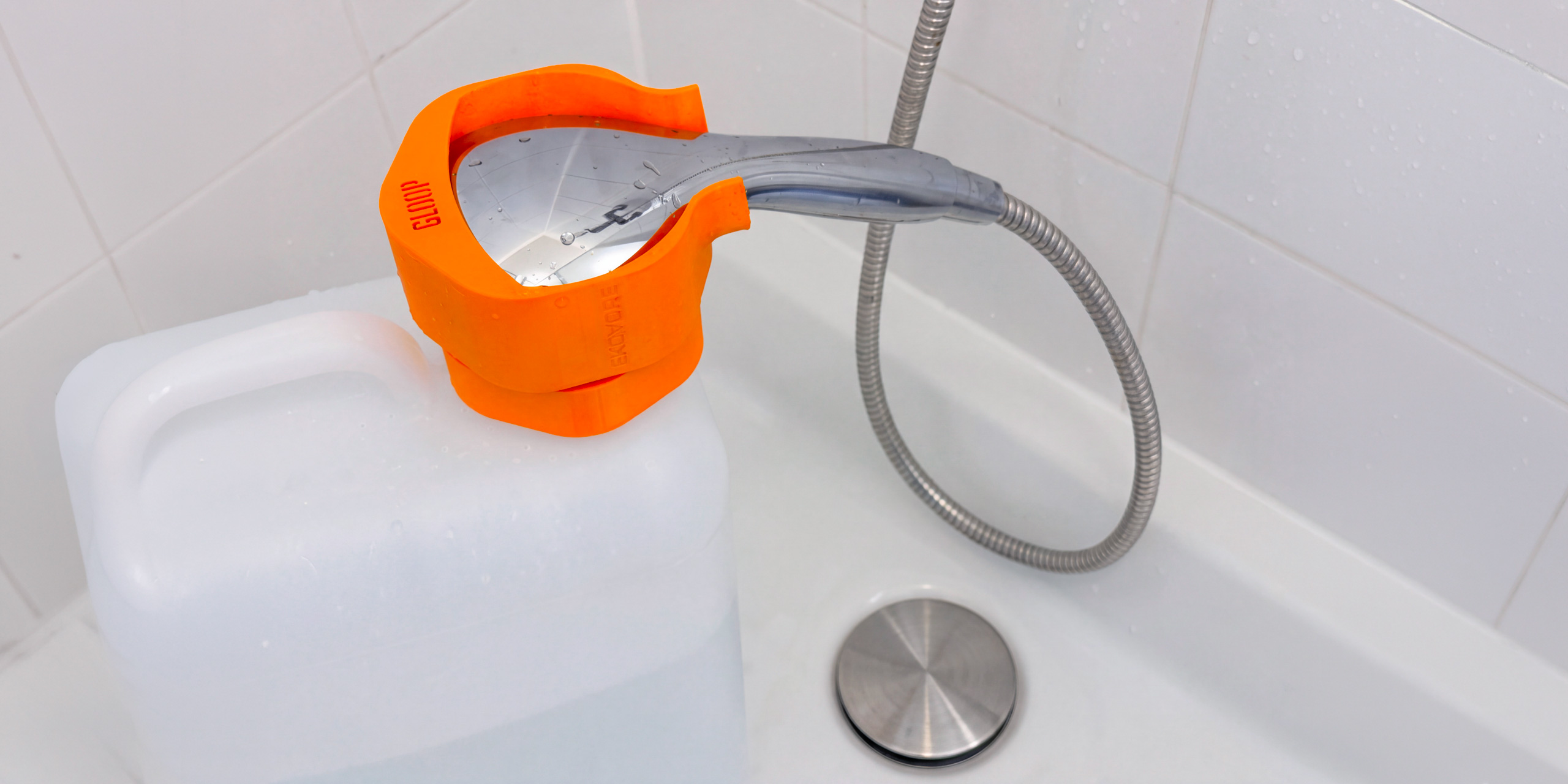
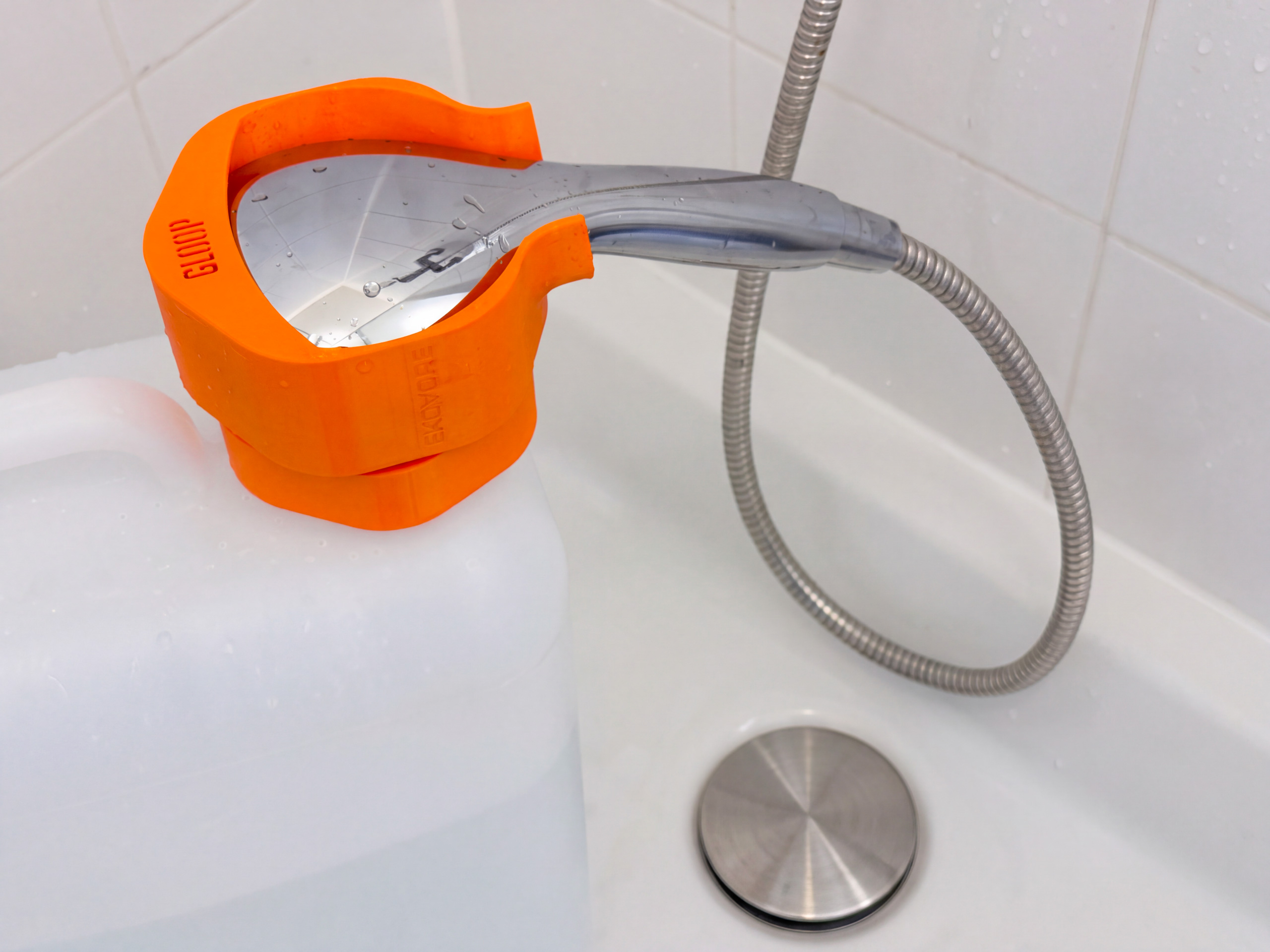
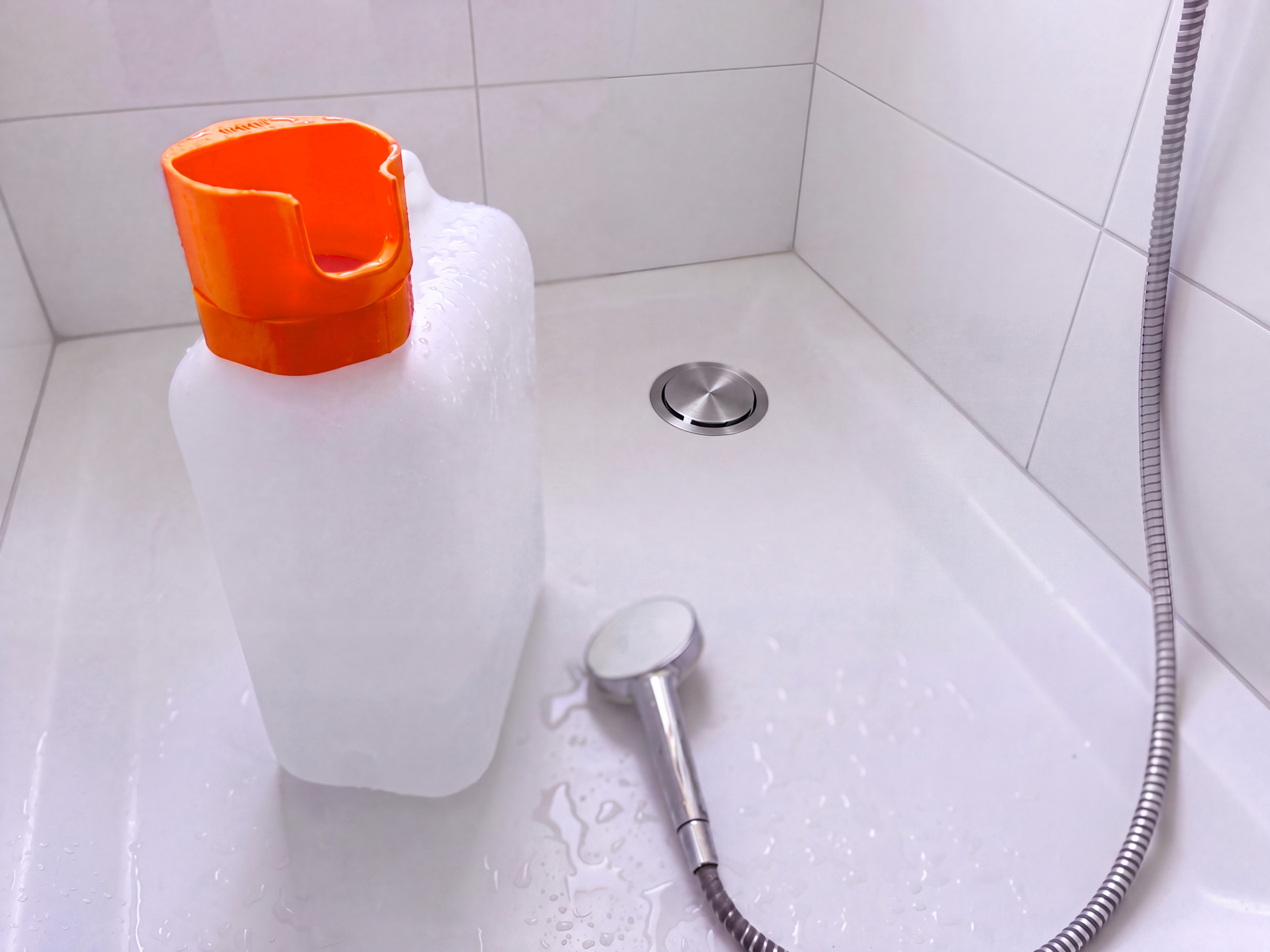
GLOOP récupère l’eau froide d’un pommeau de douche de 110 mm dans un bidon de 16 litres

Every summer, the same reality asserts itself: our water resources are coming under increasing strain.

Droughts, usage restrictions, groundwater level monitoring… Recent years have shown just how precious and fragile water is. These events also prompt us to take a fresh look at our daily habits.

At home, we sometimes use drinking water without actually needing to. This is particularly the case when taking a shower: several liters can run before the water reaches the desired temperature.

GLOOP offers a solution to this waste with a shower cold-water collector. The accessory allows this water to be collected before it goes down the drain.

Why collect the cold shower water?

Before taking a shower, 4 to 7 liters of water can flow out before the water reaches the right temperature.

This water is clean, yet we generally send it straight down the drain. However, it can still be used for many household purposes.

Rather than seeking to eliminate this wait time with increasingly sophisticated solutions, GLOOP opts for a simpler approach: capturing the water that is already flowing.

How does the GLOOP shower cold water recovery system work?

It works simply. You just place the showerhead into GLOOP. The accessory then directs the cold water into a collection container. Once the water reaches the right temperature, simply remove the showerhead and take your shower.

You can then use the collected water to water plants, clean floors, flush toilets, or for other uses suitable for non-potable water.

No plumbing modifications required. No pump. No tank to install.

GLOOP sticks to the essentials: a small accessory that captures water that would otherwise have gone down the drain.

Lightweight design to meet the essentials

We sought a lightweight solution, using minimal material and requiring no special installation.

This approach addresses a specific moment in daily life without adding a complex system to the shower.

An accessory designed not to put strain on the hose.

GLOOP features a 360° rotating turret. This allows you to position the shower head in the holder without forcing the hose into a specific curve.

GLOOP is available for 100 mm and 110 mm spouts and screws onto a collection container.

Once the container is full, you can easily reuse the water for various non-potable purposes.

Reuse water instead of letting it go to waste.

Waste less drinking water. Reuse it better. Make better use of it.

Periods of drought make this issue particularly urgent. However, water conservation should not become a concern only when restrictions are imposed.

Shortages make the urgency visible for a few weeks each year. It is up to us to derive solutions from them that can be integrated into our daily routines all year round.

GLOOP, a solution for saving water in daily life

GLOOP is available online at EKOVORE.

Posted on — Leave a comment

SUPERFERTIL: a voluntary urine collection point to fertilise our fields

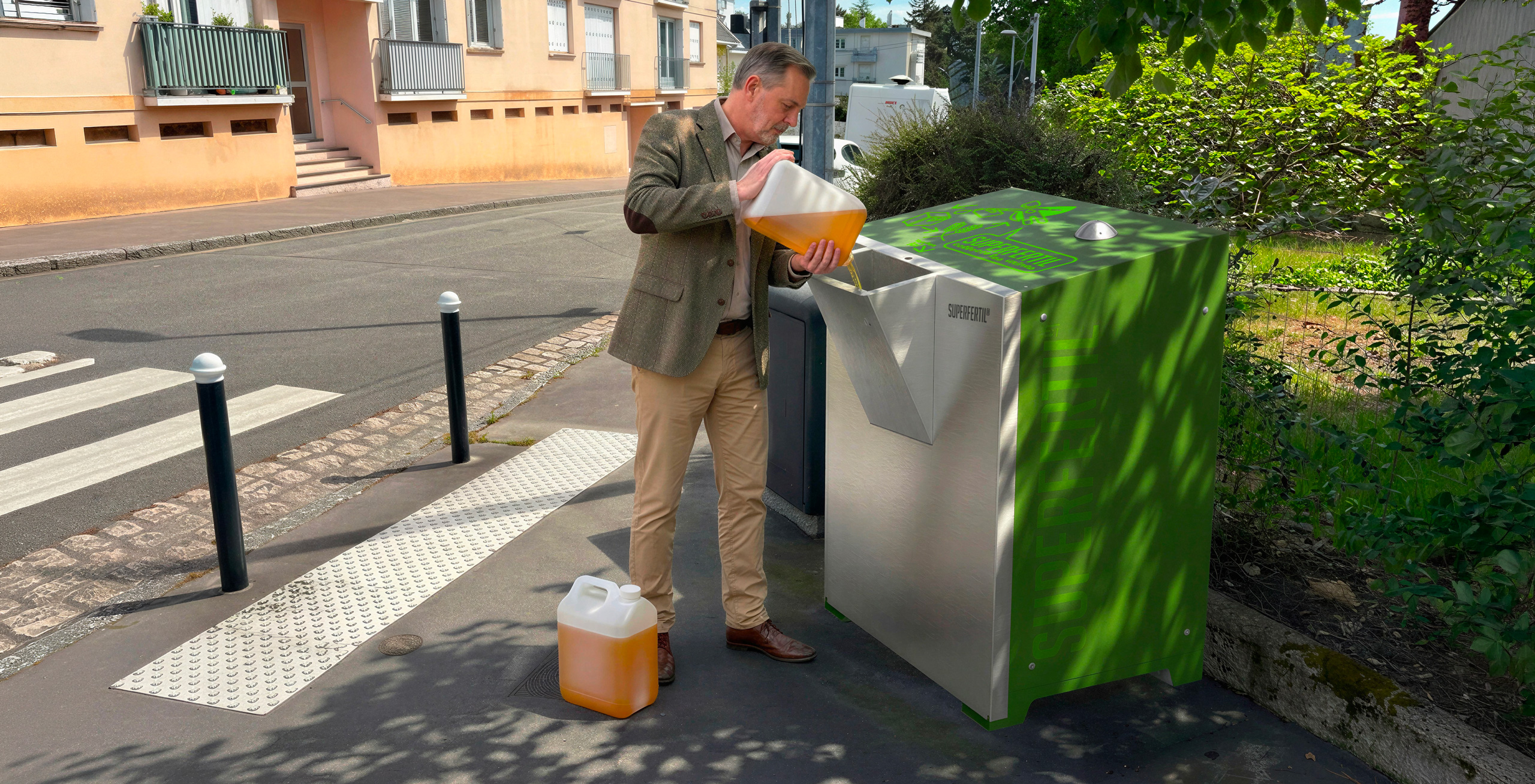
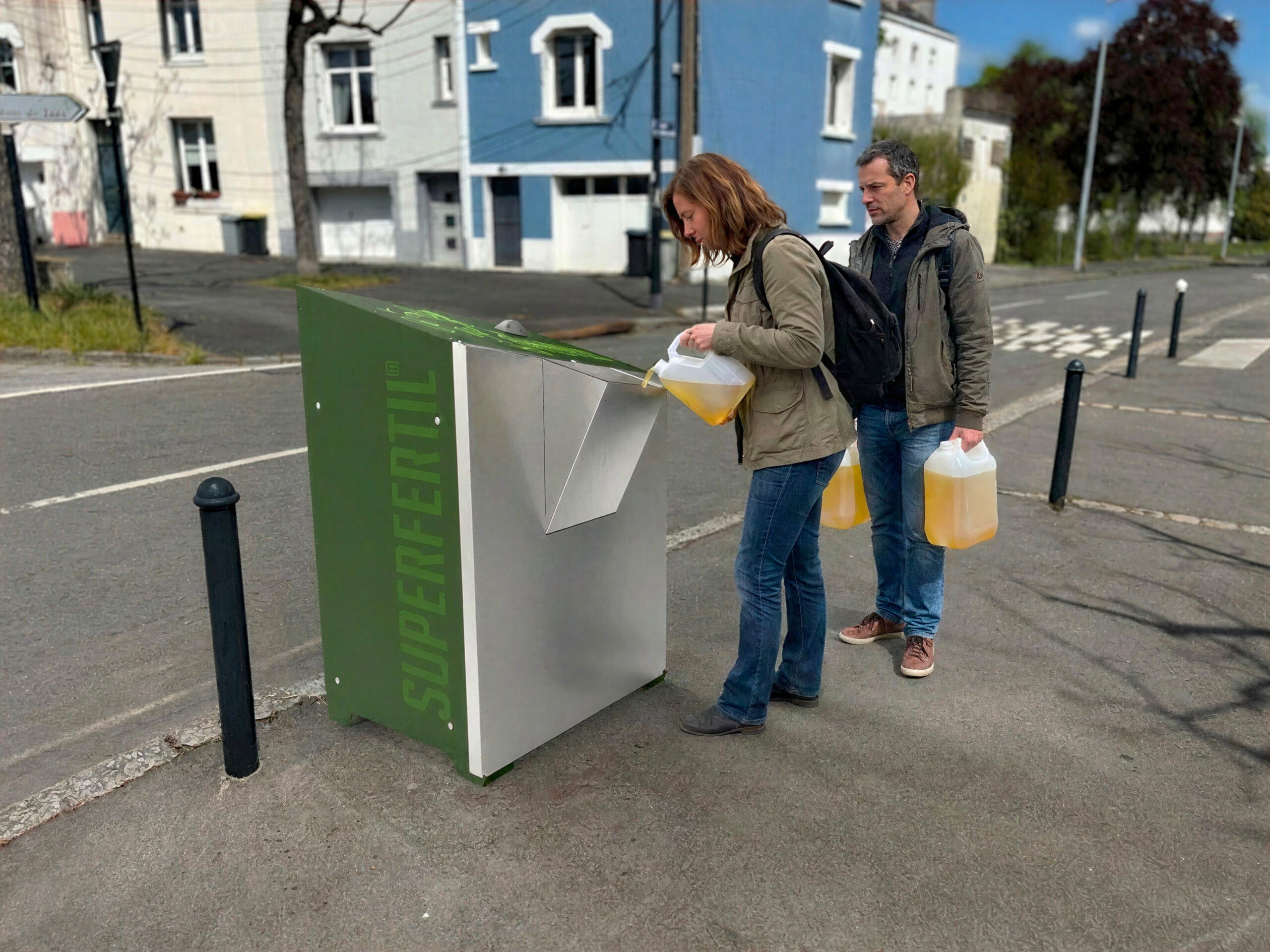
Citadin déposant ses urines dans une borne SUPERFERTIL avec deux bidons de 5 litres en ville

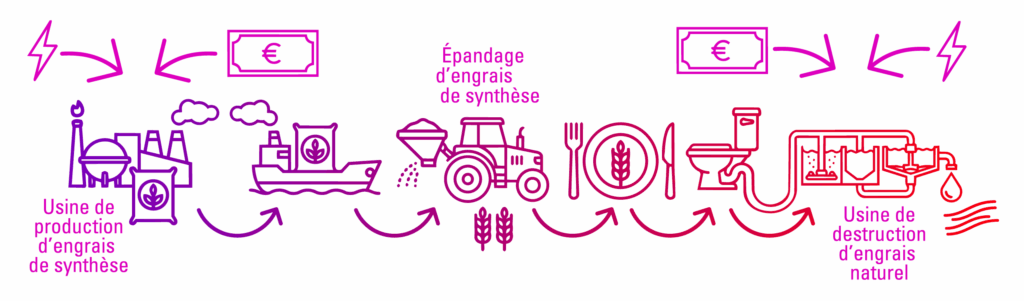
The blockade of the Strait of Hormuz has now laid bare one of the most overlooked vulnerabilities in our food system. A third of the world’s nitrogen fertilisers pass through this 34-kilometre-long corridor. Yet a solution could be found right here in our cities: human urine, rich in nutrients, is a natural fertiliser produced daily, free of charge, by each and every one of us.

Urine: a natural fertiliser that can be collected in urban areas

Human urine contains nitrogen and phosphorus in forms that plants can absorb directly – the same essential nutrients found in synthetic fertilisers imported from the Persian Gulf. When stored for a few months, it turns into liquid manure, a natural agricultural fertiliser that is ready for use.

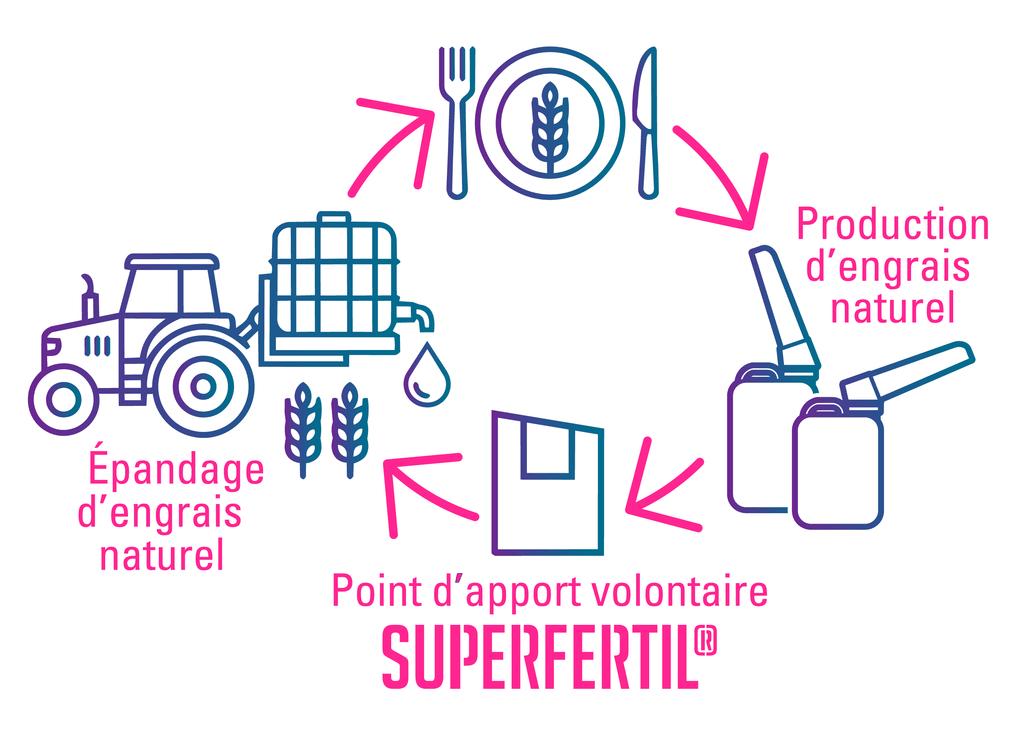
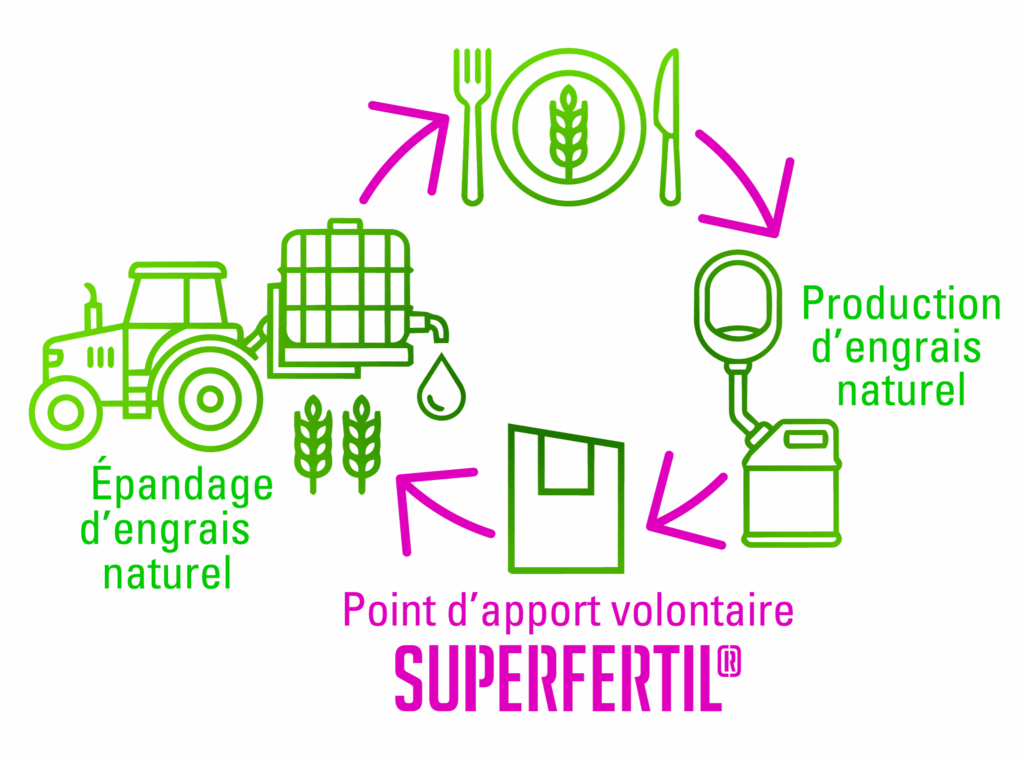
The OCAPI action research programme run by LEESU (École des Ponts ParisTech) has demonstrated this in practice through the EnVille project. Since late 2023 in Châtillon (92), around twenty residents have been dropping off their urine every week at a collection point within their AMAP. The urine collected is then returned to the fields in the form of liquid manure. The nutrient cycle is closed.

The experiment works. The question now is how to scale it up.

SUPERFERTIL: a voluntary urine collection point for the metropolitan area

This is the ambition that Ekovore wishes to pursue by offering SUPERFERTIL, a urine collection station designed to be deployed on a territorial scale.

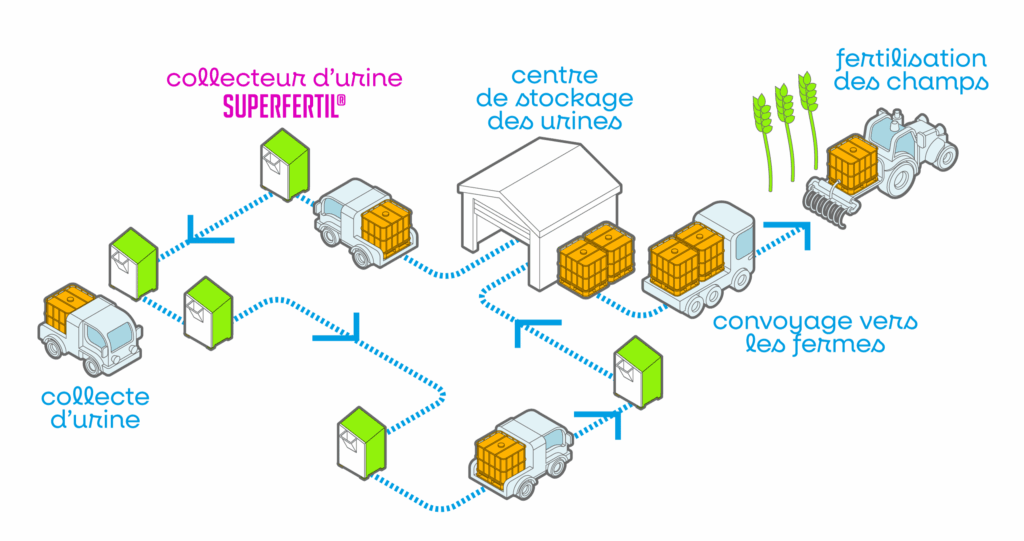
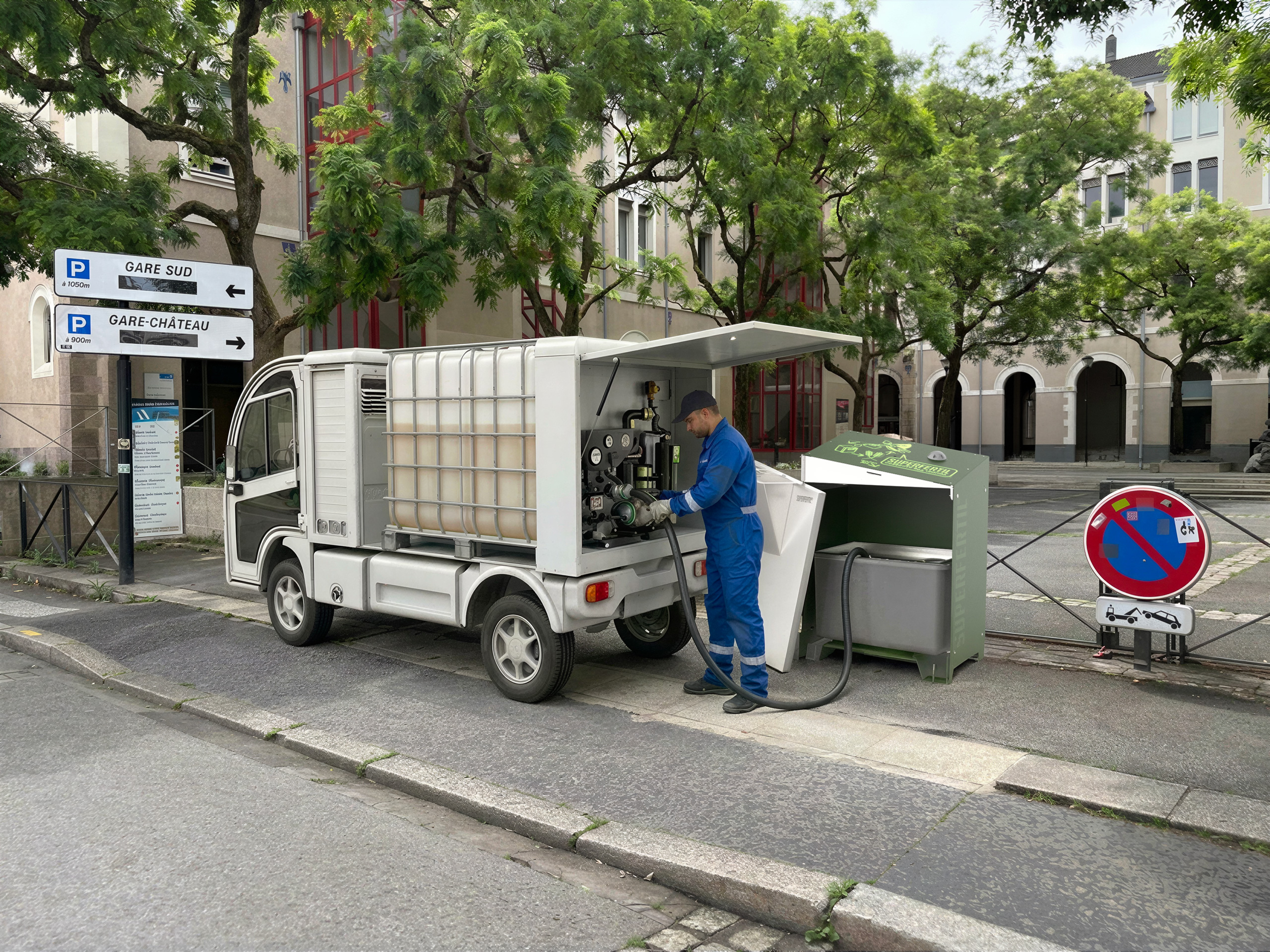
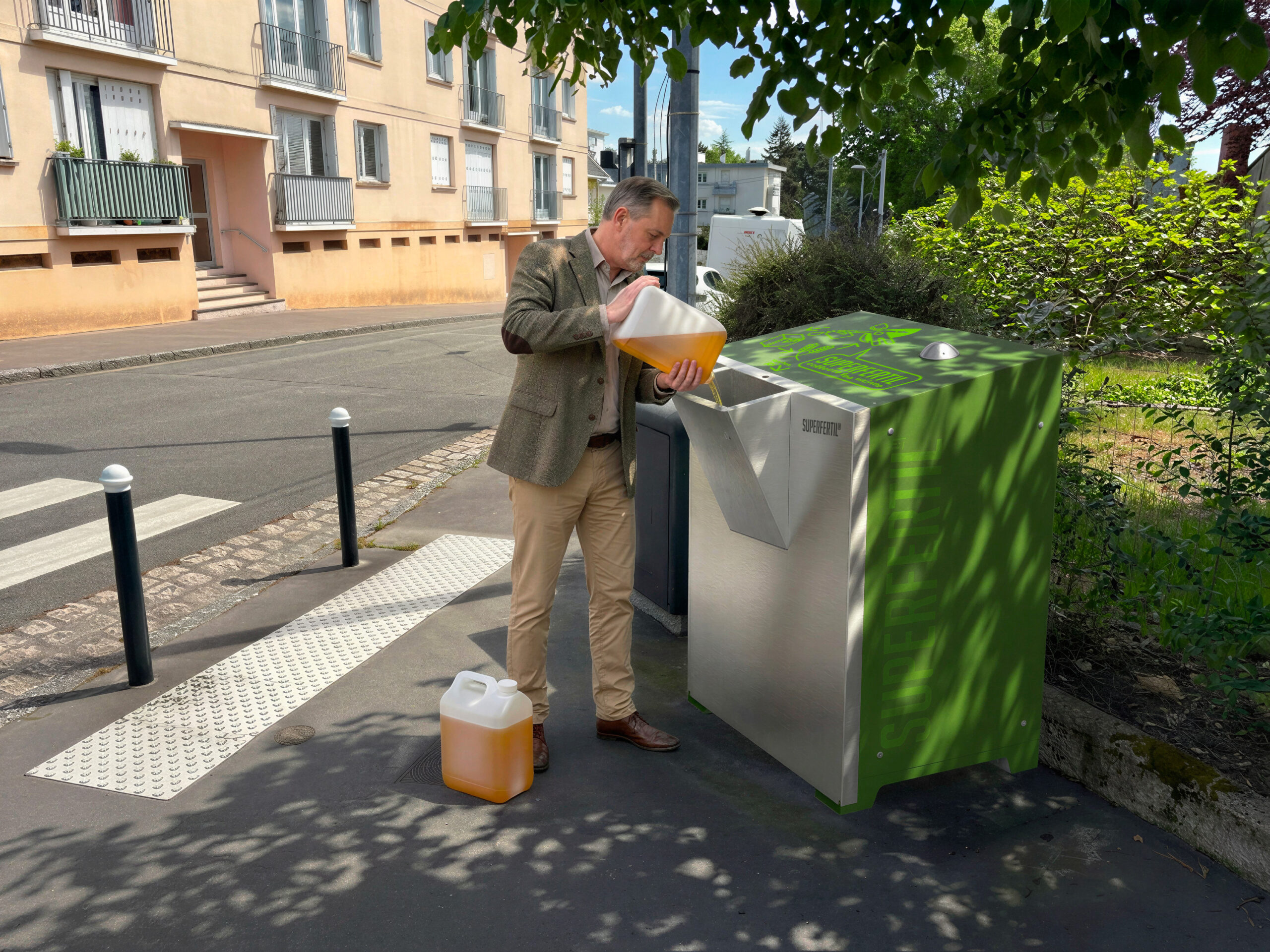
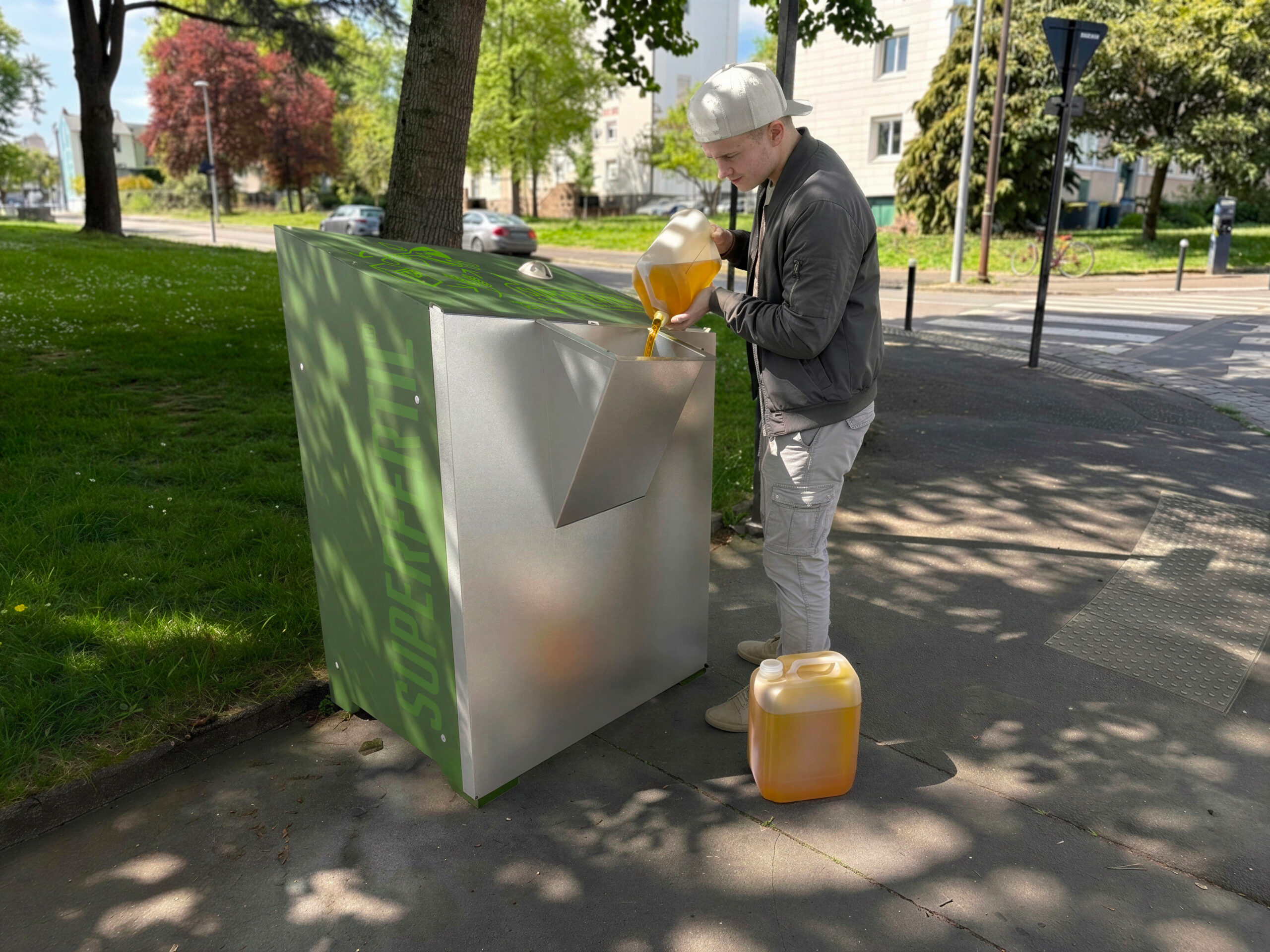
Designed by the Faltazi studio, SUPERFERTIL is installed in public spaces as a voluntary drop-off point, similar to the bio-waste containers already present in our streets. Residents deposit their urine collected at home there, in a simple and accessible way for everyone.

The objective: to build local agricultural valorization channels for urine on a metropolitan scale, relying on existing collection logistics of septic tank emptying companies and on specialized service providers to transport the collected volumes to partner farms.

From the waterless urinal to the voluntary drop-off point

SUPERFERTIL is part of a broader initiative led by Ekovore focused on the ecological management of urine in urban environments. Our waterless, eco-friendly urinals already allow for urine collection at the source in public spaces, without water consumption. SUPERFERTIL complements this approach by offering citizen-led collection and application to fields.

Two pieces of equipment, one same logic: no longer treat urine as waste, but as a resource.

Produce locally what we import from the other side of the world

The nitrogen fertilizer we currently import from the Persian Gulf can be produced locally, organically, and collectively. SUPERFERTIL is not just an urban amenity; it’s a proposal for food sovereignty at the neighborhood level.

So? Shall we fill the jerrycans?